

A client holds up a yoghurt pot on a video call and asks which number on the label they’re supposed to look at.
You explain it. They nod. A week later the same question arrives by message, this time about a cereal box.
That isn’t a failure of the explanation. A spoken answer disappears once the call ends. A short handout gives the client something to return to when the question comes up again, in the supermarket aisle rather than on a call.
The handout only helps if it answers the question the client actually asked, in words they can use, with something specific to try. This guide covers how to choose one, adapt it responsibly, introduce it during a check-in and find out whether it helped.
- 01Hear the question
- 02Choose one resource
- 03Agree one action
- 04Review what happened
01 / Start with the question
Start with the client’s question, not your library
When you have a folder of good resources, it’s tempting to send several at once. Protein, hydration, shopping, sleep: all relevant, all ready.
Sending everything shifts the work onto the client. They now have to decide what to read first, how the pieces connect and which parts apply to them. Some won’t read any of it, and you won’t know whether the material was unsuitable or never opened.
A narrower approach is easier to follow and easier to review. Hear the question. Choose one resource that answers it. Agree one thing the client will try. Ask about it next time.
This is a way of organising your support, not a rule that one page always beats five. Some clients prefer the full picture, and a longer guide sometimes suits a broader topic. The point is that each resource should arrive for a reason the client recognises.
02 / Choosing
Match the resource to the moment
The same topic can serve different questions, so start from what the client said. The table pairs common questions with a type of handout and a follow-up action you could agree together. Where a guide from the E-Guide Bundle may fit, it is named as a starting point. Read any guide yourself before sending it: a title describes a topic, not your client’s exact situation.
| The client asks | A suitable handout | A follow-up action to agree |
|---|---|---|
| “I never know what to cook during the week.” | A one-page meal-planning worksheet (see the worked example below) | Plan three weekday dinners before the next check-in |
| “What am I meant to look at on a food label?” | A short label-reading explainer with one annotated example | Compare two products they already buy and note one difference |
| “My shopping never matches what I actually eat.” | A practical shopping guide; consider Learn to Shop Better | Write one list from planned meals and report what changed |
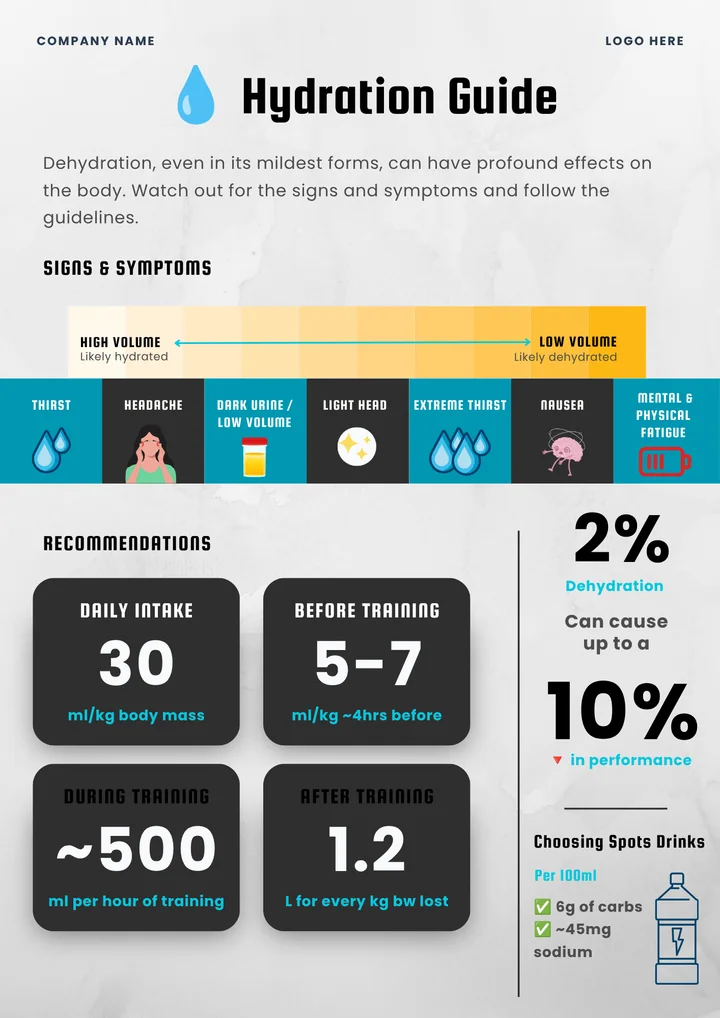
| “I forget to drink anything at work.” | A quick-reference sheet; consider the Hydration One-Pager | Notice, on two working days, when drinks are usually missed |
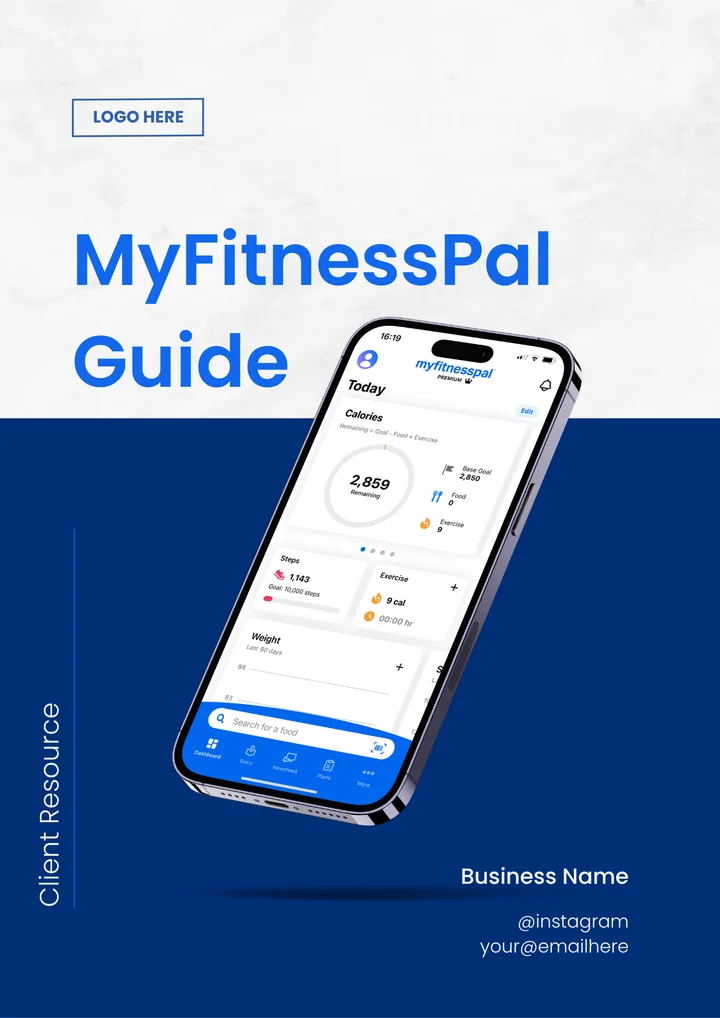
| “I can’t find half my meals in MyFitnessPal.” | An app how-to; consider the MyFitnessPal Guide | Log one typical day and bring the entries that were hard to find |
| “My GP says I need to change my diet for my blood pressure.” | Not a general handout question | Ask what advice they’ve already been given and work within your scope, referring where needed |
The last row matters. A handout can support general understanding. It shouldn’t stand in for advice about a diagnosed condition, medication or an individual clinical target.
03 / What to look for
What a good handout contains
Whether you write your own or adapt a ready-made one, check for these parts:
- A title that names the question. “Reading a food label” is easier to find again than “Nutrition basics, part 3”.
- A short explanation. Enough to understand the idea, without a full textbook chapter.
- A visual or worked example. An annotated label, a filled-in planner or a sample shopping list shows what the explanation looks like in practice.
- One realistic action. Something the client can do in the coming week with the food, time and equipment they have.
- Sources. Where the substantive claims come from.
- A publication and review date. So you and the client can tell how current it is.
These echo established guidance on public health information. The CDC’s Clear Communication Index scores materials on having one main message and specific recommendations, and the Patient Information Forum recommends that health resources add a publication and review due date and include a full list of references.
General education or personalised treatment?
General education explains an idea that applies broadly: what the parts of a label mean, why planning meals ahead can make a week easier, how a tracking app works. Personalised treatment sets specific amounts, restrictions or plans for one person, often in relation to a health condition, pregnancy, medication or a history of disordered eating.
A handout should sit clearly in the first group. If a client’s question needs the second, the answer depends on your qualifications and professional obligations, not on finding a better PDF. The E-Guide Bundle is described on the same terms: general educational tools, not personalised or condition-specific plans.
04 / Adapting
Adapt language and presentation, not meaning
A handout that is accurate but hard to read won’t do its job. The NHS digital service manual notes that more than 4 in 10 adults in England struggle with health content written for the public, rising to more than 6 in 10 when the content includes numbers and statistics. It also warns that readability tools can’t tell you how usable content is. Reading it with real readers can.
When you adapt a handout for a client, consider:
- Reading level. Use everyday words, short sentences and headings that work as signposts. Explain the one technical term you can’t avoid.
- Cultural relevance. Swap example meals for foods the client’s household actually eats. A shopping example built around one supermarket chain may not fit someone who shops at a local market.
- Food availability and budget. An action that depends on ingredients the client can’t easily get is not a realistic action.
- Readability and accessibility. Use real headings rather than bold text, add alt text to images and check colour contrast. GOV.UK’s guidance on publishing accessible documents also notes that PDFs often work poorly with screen readers. If a client uses assistive technology, ask what format suits them.
Changing an example food keeps the meaning. Changing a quantity, a claim or a recommendation changes the content. If you alter anything substantive, or adapt a handout for a client with a medical condition, have someone qualified in that area review it first. In recipe-based resources, nutrition values don’t recalculate automatically when you edit ingredients.
If you’re using ready-made resources, check what the licence lets you change and share. Our guide to white-label nutrition resources covers selection and permissions, and the Canva branding videos show how to add your logo, colours and fonts.
05 / A worked example
A complete sample: a weekday meal-planning worksheet
Here is a short worksheet for the first question in the table. It was written for this article as an illustration and is not part of the E-Guide Bundle. It contains no nutrition targets, so it stays within general education.
Planning three weekday dinners
Weeknights are often when food decisions get made in a hurry. Deciding a few dinners in advance means fewer of those decisions happen at 7 p.m. with an empty fridge. You don’t need to plan the whole week. Three dinners is enough to start.
Your task: choose three weekday evenings. For each one, write a dinner you already know how to make, what you’d need to buy, and when you’ll do any preparation.
| Evening | Dinner | To buy | Prep, and when |
|---|---|---|---|
| Example: Monday | Chicken stir-fry with rice | Peppers, spring onions | Chop veg on Sunday evening |
| 1. | |||
| 2. | |||
| 3. |
Before our next check-in: which of the three dinners happened, and what got in the way of any that didn’t?
The worksheet has the parts from section 3: a clear title, a short explanation, a worked example row, one task and a review question. The review question matters most, because it gives you something specific to ask next time.
06 / At the check-in
Introduce it as part of the conversation
A handout lands better when it’s connected to something you’ve agreed, rather than arriving as an unexplained attachment. Introduce it at the end of the check-in, then send it with a short message that repeats the agreement and leaves room to change it.
The message names the client’s own words, restates a small action and makes it clear they can adapt or decline. Sam is a fictional client. Keep real names and details out of any examples or screenshots you share elsewhere.
If the client is new, handouts like this usually follow the first consultation rather than arriving in the welcome email. The onboarding guide covers that timing, and the welcome-pack guide covers what to send on day one.
07 / Follow up
Follow up, then decide what comes next
At the next check-in, ask about the handout before moving on. Three questions cover most of it:
- What was useful?
- Was anything confusing or hard to use?
- What happened when you tried it?
Avoid asking “Did that make sense?” People often just say yes. NHS Scotland’s guidance on chunk and check makes the same point and suggests pairing it with teach-back: asking the person to explain the idea in their own words, framed so it doesn’t feel like a test.
Suppose Sam planned three dinners and made two. Wednesday didn’t happen because of a late shift. The sheet did its job: it showed where the week breaks down. The next step might be a quicker option for late-shift evenings, not another planning resource.
Use the conversation, not access data, to choose what comes next. A download or an opened link shows the client received something. It doesn’t show they used it, understood it or changed anything.
Revise the handout too. If two clients misread the same line, rewrite the line. Note the change and update the review date.
08 / Before you send it
A resource-quality checklist
Run any handout through these questions before it reaches a client, and again when its review date comes up.
| Check | Ask |
|---|---|
| Source reliability | Are substantive claims backed by current guidelines or primary research, and are the sources listed? |
| Authorship | Who wrote it, and were they qualified to write about this topic? |
| Scope | Does it stay within general education, and within your own scope of practice? |
| Currency | Does it show a publication and review date, and is the review still in date? |
| Permissions | Does your licence let you edit it and share it with this client in this format? |
| Readability | Could the client explain the main point in their own words after one read? |
| Fit for this client | Does it suit their question, culture, food access, budget and preferred format? |
On permissions: with The Content Cook’s resources, you can brand finished materials and share them with your own coaching clients, but not publish them publicly or pass on the source templates. The licensing terms set out the details.
The E-Guide Bundle
Explain it once.
Give them a guide.
32 educational guides on topics clients ask about, from hydration and protein to shopping and MyFitnessPal. Add your branding in Canva Free and share them with your clients.
Explore the E-Guide Bundle