
If you’ve ever quoted a client prospect your hourly rate, you’ve quoted a number that probably has very little to do with what you actually earn.
Most nutrition coaches think they charge somewhere between $100 and $200 an hour. They mention this on sales calls. They feel it justifies their package prices. They occasionally feel mildly underpaid when a friend in tech mentions their consulting rate. And the entire time, the number they think they’re charging is roughly double what they actually earn per hour worked.
This isn’t a problem with the quoted rate. It’s a problem with the maths underneath it. And once you see it, you can’t unsee it — because it changes which decisions in your business are urgent and which are cosmetic.
This post is the systemic version of the argument. The Custom Meal Plans post is the specific version (one tactical leak, one tactical fix). This one is broader: why the quoted rate is structurally divorced from the effective rate for nearly every nutrition coach, the time audit that surfaces the gap, and the four levers that close it without losing clients or raising prices.
The two hourly rates every coach actually has
Every nutrition coach is operating with two hourly rates simultaneously. They almost never talk about both, and the gap between them is where most coaching businesses quietly underperform their potential.
The quoted rate
This is the number coaches say out loud. It’s calculated from the package price divided by client-facing hours. A $1,500 12-week package with two 30-minute calls per month produces 12 billable hours over 12 weeks — a quoted rate of $125/hr. The coach mentions this in conversation and feels reasonably compensated.
The effective rate
This is the number that actually matters. It’s calculated from the package price divided by total hours worked on behalf of that client — including everything not on the call. Messaging, voice notes, meal plan writing, recipe research, content the client expects to see, admin to support the relationship, and the time spent worrying about the client at 11pm. For the same $1,500 package, the actual total hours worked tend to land somewhere between 30 and 50. The effective rate is $30–$50/hr.
These are not equivalent numbers. The quoted rate is what feels true. The effective rate is what is true. Coaches who run a serious time audit — for the first time — are almost always surprised by the gap, even though they have lived inside it for years.
The quoted hourly rate is a marketing number. The effective hourly rate is a business number. Coaches who only know the first one make decisions based on what feels true. Coaches who know both make decisions based on what is true.
The time audit that surfaces the gap
Before suggesting fixes, it helps to actually see the leak. Here’s the typical time breakdown for a working nutrition coach managing 10 clients at $300/month per client — $3,000/month gross revenue — across a typical 30-day cycle:
| Activity | Hours per month | Hourly value (perceived) | Effective hourly value (real) |
|---|---|---|---|
| 1-to-1 coaching calls | 10–12 | $150/hr | $150/hr |
| Voice notes + messaging | 6–8 | Bundled in package | $0 (free labour) |
| Custom meal plan writing | 6–8 | Bundled in package | $0 (free labour) |
| Recipe cards + content design | 6–8 | Bundled in package | $0 (free labour) |
| Social media + email content | 8–12 | Marketing time | $0 (overhead) |
| Admin (scheduling, billing, queries) | 8–12 | Necessary | $0 (overhead) |
Total hours per month: ~50. Total revenue: $3,000. Effective hourly rate: roughly $60–$70 per hour — before tax, before software costs, before pension contribution, before health insurance, before any meaningful margin.
The coach in this example is quoting $150/hr on sales calls. They’re earning less than half that. The shortfall isn’t theft or inefficiency in any malicious sense. It’s a structural feature of how nutrition coaching is typically packaged: a big container of work, only some of which gets explicitly costed.
The three places time silently disappears
Look closely at the audit and the leakage falls into three categories. Each one has a different fix, and the fixes compound.
Category 1: Free labour bundled into the package
Voice notes, messaging, custom meal plan writing, recipe support, weekly check-in responses. The client perceives all of this as part of “the coaching.” The coach treats it as free because it’s bundled into the package price. From an effective hourly perspective, it’s $0/hr labour — and there’s typically 18–26 hours of it per month for a coach with 10 clients.
This category is the largest in nearly every audit, and it’s where the most leverage is available. Custom meal plans are the single highest-cost offender (covered in detail in the Custom Meal Plans post), but voice notes and messaging are a close second.
Category 2: Marketing and content overhead
Social media posts, email newsletters, blog content, lead magnets, sales call prep — the work that produces clients in the first place. This is genuinely necessary work, but it doesn’t appear on an invoice and doesn’t directly produce revenue per hour spent. It’s the cost of running a business.
Most coaches spend 8–12 hours per month on content. The leverage opportunity here is enormous — white-label content and templated workflows can cut this category by 70–80% without reducing what gets published, which is one of the largest single-lever improvements available.
Category 3: Pure admin overhead
Scheduling, invoicing, replying to enquiries, troubleshooting tech, chasing late payments, sending welcome packs, processing intake forms. Necessary work, mostly low-skill, almost entirely automatable or delegatable. Typically 8–12 hours per month.
Most coaches under-invest in fixing this category because each individual task feels too small to systematise. But 12 hours per month of unautomated admin, sustained over a year, is 144 hours — nearly four full working weeks per year, lost to work that should have run itself
The four levers that close the gap
The good news — and it’s substantial good news — is that each category has a working fix that doesn’t require raising prices, losing clients, or working harder. The four levers compound.
Lever 1: White-label content
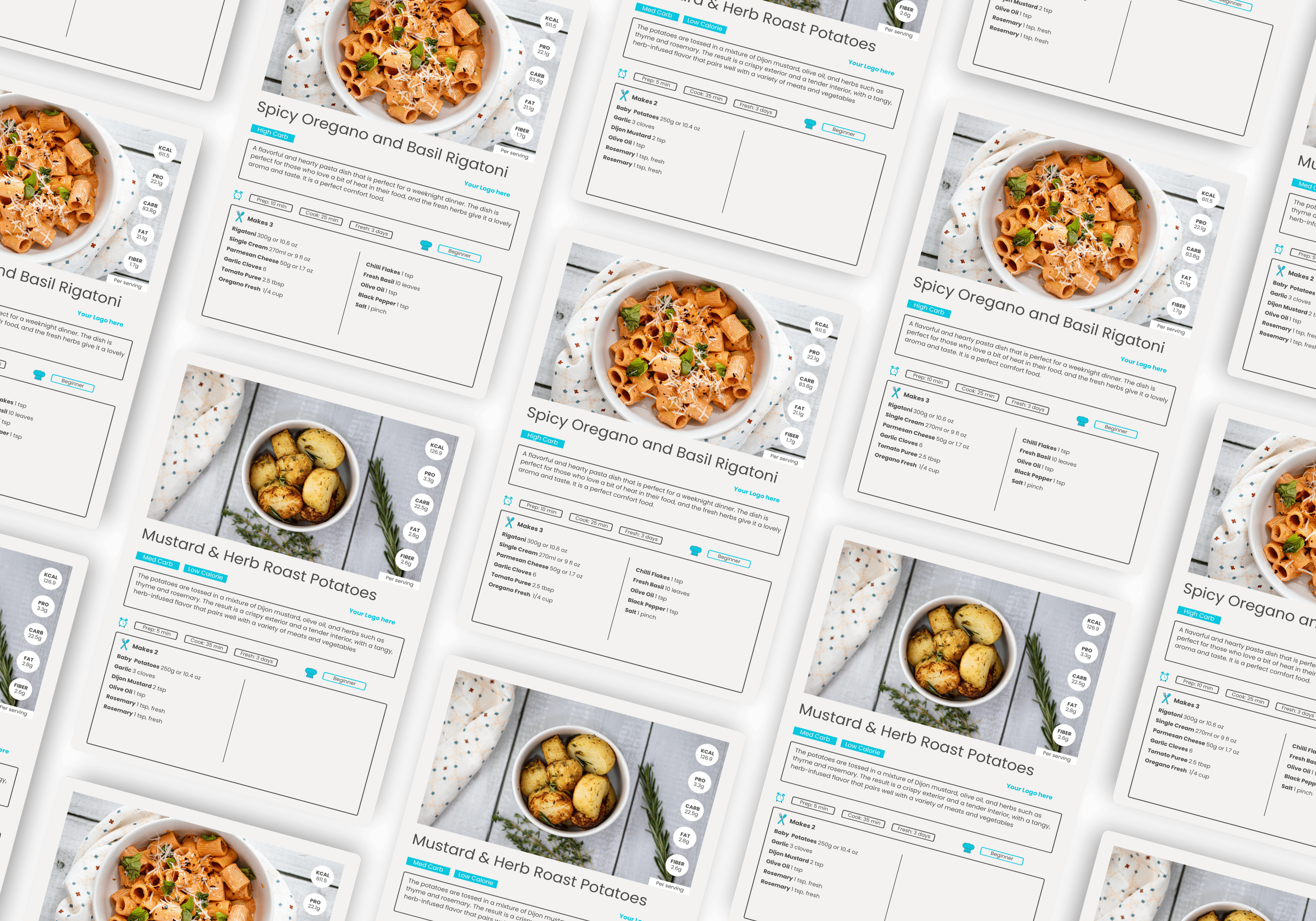
Cuts content creation time from 8–12 hours/month to 1–2 hours/month. The work of designing recipe cards, e-guides, social posts, and client materials gets replaced by professionally-designed templates branded with your colours and logo. The Content Cook builds this product specifically for this leverage point — nutritionist-developed Canva templates that coaches brand in minutes rather than hours.
Lever 2: Template-based meal plans
Cuts custom meal plan writing from 6–8 hours/month to 2 hours/month. Rather than writing every meal plan from scratch, coaches start from templated structures (covered in detail in the Custom Meal Plans post) and personalise only the variables that matter. Same client outcomes; one-third the time.
Lever 3: Structured async messaging
Cuts voice notes and messaging from 6–8 hours/month to 2–3 hours/month. Replaces unstructured Whatsapp ping-pong with batched, scheduled check-ins and clear async expectations. Clients adapt to the structure quickly, and adherence often improves because the responses are more thoughtful.
Lever 4: Automated onboarding and admin
Cuts admin from 8–12 hours/month to 3–4 hours/month. Welcome packs (sent automatically on payment), templated check-in scripts, scheduling tools that handle their own confirmations, and one-click invoicing. Each individual fix takes an afternoon. Combined, they recover an entire working week per month.
Run those four levers across the time audit above and the numbers change dramatically:
| Lever | Time recovered per month | Effective rate at $3k/month revenue |
|---|---|---|
| Baseline (no changes) | 0 hours | $67/hr |
| White-label content (cut content from 8–12 hrs to 1–2 hrs) | 8 hours | $79/hr |
| Template-based meal plans (cut from 6–8 hrs to 2 hrs) | 6 hours | $90/hr |
| Async messaging structure (cut voice notes from 8 hrs to 3 hrs) | 5 hours | $103/hr |
| Automated onboarding (cut admin from 10 hrs to 4 hrs) | 6 hours | $120/hr |
| All four levers applied | 25 hours | $150/hr |
This is the most important observation in the post. The coach whose effective rate climbed from $67 to $150 didn’t raise their prices. They didn’t take on more clients. They didn’t work harder. They removed 25 hours of monthly leakage from work that was always supposed to be incidental to the coaching, not the bulk of it.
Why this matters more than raising prices
Most coaches who recognise the gap reach for the same lever first: raise prices. It feels intuitive — if I’m earning $67/hr instead of $150/hr, I should charge more. But raising prices in isolation produces a smaller improvement than coaches expect, because the underlying time leakage doesn’t go away.
Consider a coach who raises package prices 20% (from $300 to $360 per client per month). At 10 clients, revenue rises from $3,000 to $3,600. If hours worked stay constant at 50/month, the effective rate climbs from $60/hr to $72/hr — better, but still a long way from the quoted rate. And there’s a real risk of losing 1–2 clients to the price rise, which would erase most of the gain.
Now consider the same coach applying the four leverage fixes above. Hours drop from 50 to ~25. Revenue stays at $3,000. Effective rate climbs from $60/hr to $120/hr. No clients lost. No prices raised. The coach now has 25 reclaimed hours per month — which can become time off, time for content that compounds (SEO, podcast, list building), or the platform to add 5–8 more clients at the same effective hourly rate.
That last sequence is the working pattern. Fix the leakage first, then raise prices from a position of capacity — not from a position of burnout.
Frequently asked questions
It depends entirely on how you measure it. The quoted rate — the number a coach mentions in a sales call — typically sits between $80 and $200 per hour. The effective rate, calculated as total revenue divided by total hours actually worked (including admin, content, custom meal plans, messaging, and unbillable overhead), usually lands between $40 and $90 per hour. The gap between the two numbers is where most coaching businesses quietly underperform their potential.
Track every hour spent on coaching-related work for one full month — not just billable client time. Include calls, voice notes, messaging, custom meal plans, content creation, admin, marketing, sales calls, and anything else the business requires. Divide your total monthly revenue by total hours worked. That number is your effective hourly rate. Most coaches who run this audit are surprised by how much lower it is than the rate they quote.
Because the quoted rate only accounts for billable client-facing time, while the effective rate captures everything else — admin, content creation, messaging, custom meal plan writing, marketing, and the dozens of small recurring tasks that don’t appear on an invoice but consume real hours. For most nutrition coaches, billable hours represent 25–40% of total working hours. The rest is unpaid labour absorbed into the package price.
Reduce the hours spent on content creation and custom meal plan writing — the two largest hidden costs in most nutrition coaching businesses. Using professionally designed white-label content cuts content creation from 8–12 hours per month to 1–2. Using templated meal plan structures (rather than fully custom ones) cuts that from 6–8 hours to 2. Combined, those two changes alone typically lift the effective hourly rate by 30–50% without changing the package price or losing clients.
Raising prices is one lever, but it’s rarely the most effective starting point. Coaches who raise prices without addressing time leakage often end up working the same hours for slightly more money — the effective hourly rate improves modestly. Coaches who address time leakage first (content systems, meal plan templates, async messaging, automated onboarding) typically see effective hourly rates improve dramatically without losing any clients to price increases. The right sequence is: fix the time leakage, then raise prices.
The fastest way to fix the two biggest leaks
The two largest leaks in the audit above — content creation and meal plan writing — are exactly what the Complete Coach Toolkit was built to solve. A full library of nutritionist-developed Canva templates: recipe cards, e-guides, meal plan structures, social media carousels, onboarding materials, client check-in templates. All branded in your colours and logo in minutes. The work that’s currently absorbing 14–20 hours of your month gets done in 2–3. The effective hourly rate climbs immediately, without any change to your package price, your client load, or what your clients actually receive. The clients see better-designed materials; you spend the recovered time on coaching, not designing.