
Almost every nutrition coach has a lead magnet somewhere on their website. A free PDF. A seven-day meal plan. A “download my guide” popup. And yet, most of those lead magnets do one of two things: generate almost no opt-ins, or generate opt-ins that never convert into paying clients.
The reason is rarely the format. It’s the content.
A cheaply designed, generic lead magnet — the kind most coaches cobble together in an afternoon — tells a potential client something important before they’ve even finished reading it: that this is what your paid work probably looks like too. The first impression of your professionalism is the free thing. Get that wrong, and the paid service never gets a chance.
This post is about fixing that. Specifically, it’s about using professionally designed, nutritionist-developed white-label content as the foundation of lead magnets that do three things well: attract the right audience, demonstrate real value instantly, and warm people up for the paid offer that follows.
Here are the seven formats that consistently convert in 2026, why they work, and how to build each one using content you don’t have to create from scratch.
Why lead magnets still beat paid ads for nutrition coaches
It’s worth briefly addressing the most common objection before going further: “Aren’t lead magnets dead?”
No. They’ve changed, but they’ve never been more effective for nutrition coaches specifically — provided they meet the current bar.
The reason is straightforward. Paid ads for nutrition coaching have become significantly more expensive as the industry has grown, and the platforms have gotten stricter about health-related claims. Meanwhile, trust has become the single hardest currency to buy. A well-designed lead magnet, delivered through a considered email sequence, builds trust in a way a cold ad can’t. It also builds an owned audience — an email list — that you can nurture regardless of what Instagram, Meta, or TikTok decide to do with their algorithms next.
The catch is that the bar has risen. A half-broken PDF with generic stock photography and inconsistent typography doesn’t build trust in 2026 — it actively damages it. Which is precisely where white-label content earns its place.
Your lead magnet is the first deliverable a potential client sees. It has to look and read like something you’d charge money for — because in their mind, it is.
The seven formats that convert — overview
Before diving into each one, here’s how the seven formats compare in terms of effort to build, typical opt-in performance, and the type of audience they work best for. Opt-in rates assume a well-positioned landing page with a focused, single call-to-action.
| Format | Time to build | Typical opt-in rate | Best for |
|---|---|---|---|
| Recipe book / bundle | 30 min (branded) | 35–55% | Fat loss audience |
| Client education e-guide | 30–45 min | 25–40% | Habit / mindset audience |
| Macro / calorie calculator | 2–4 hrs (once) | 40–60% | Data-driven clients |
| Swap / substitution sheet | 20 min | 30–45% | Allergy / dietary audiences |
| Meal plan sample | 30 min (branded) | 40–55% | High-intent buyers |
| Mini video course | 4–8 hrs (once) | 20–35% | Premium positioning |
| Quiz / assessment | 3–5 hrs (once) | 50–70% | List-building at scale |
The ranking here isn’t strict — context matters enormously. A meal plan sample converts differently for a performance-focused audience than a fat loss one. What the table shows is that the highest-converting formats aren’t necessarily the ones that take longest to build. In fact, three of the top four are formats you can produce in under an hour using existing white-label content.
1. The branded recipe book
The single most consistently high-performing lead magnet for nutrition coaches, across virtually every niche, is a branded recipe collection. Specific, focused ones — “10 high-protein breakfasts under 400 calories,” “15 one-pan meals for busy clients,” “A week of plant-based performance meals” — outperform general recipe bundles every time.
Why it works: food is tangible, immediately useful, and the perceived value is high. A good recipe collection also naturally filters for the type of client you actually want — someone interested in practical, everyday nutrition rather than vague theory.
How to build it fast using white-label content
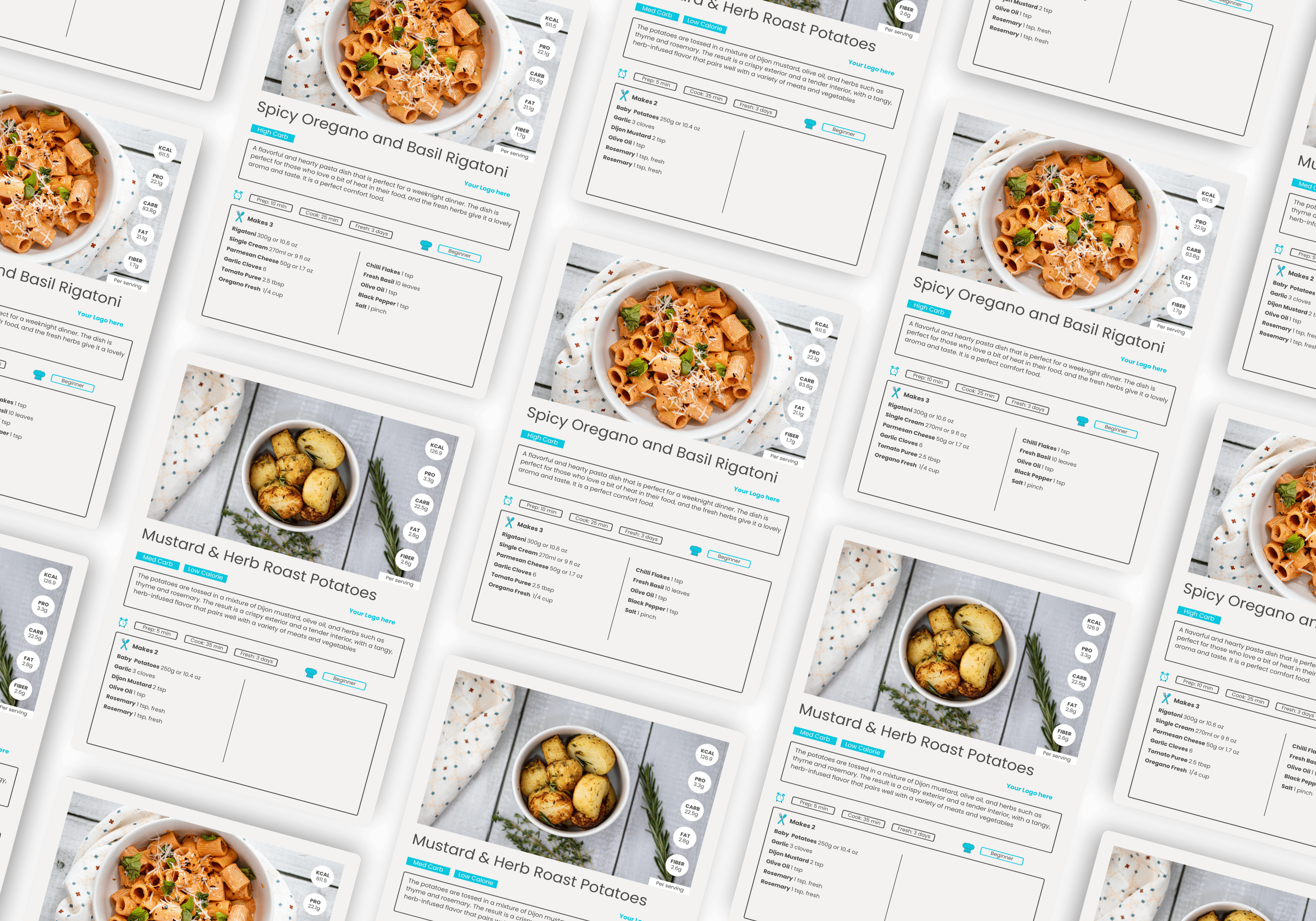
Start with a white-label recipe bundle that already includes professionally photographed recipes with macros and cooking instructions. Pull out 10–15 that match a specific angle (fat loss, performance, plant-based, family meals). Add your logo, a short introduction note in your voice, and contact details on the back page. Export as a PDF. The whole thing should take 30–45 minutes if the underlying content is already in Canva.
The important detail: don’t just dump every recipe you have into one document. A tightly curated collection of 10–15 recipes on one specific topic outperforms a generic “50 recipes” bundle by a significant margin, because it signals expertise in a specific area and attracts the right client.
2. The client education e-guide
Where the recipe book delivers practical value, the e-guide delivers credibility. A well-structured client education guide on a focused topic — “A coach’s guide to protein,” “Understanding hunger signals,” “What to eat around training” — positions you as the knowledgeable voice in a space saturated with Instagram opinions.
Why it works: clients are exhausted by contradictory nutrition information. A clear, evidence-based guide from a qualified professional does heavy trust-building work before a conversation ever starts.
How to build it fast using white-label content
The Content Cook’s E-Guide Bundle is designed for exactly this use case. Each guide is developed by qualified nutritionists, fully branded in your colours and logo through Canva, and written in a tone that’s accessible without being dumbed down. Pick the topic that matches your niche, customise the intro and outro to your voice, and you have a genuinely premium-feeling lead magnet in under an hour.
One adjustment that makes a disproportionate difference: add a short personal note on page two — a paragraph in your own words about why this topic matters to you and who the guide is for. It turns a generic-feeling resource into something that clearly represents you.
3. The macro and calorie calculator
An interactive calculator sits in a different category from static PDFs. It’s a tool rather than a document, and it tends to outperform almost everything else on opt-in rate because the value is specific, personalised, and instant. The visitor inputs their details; the tool gives them a tailored output.
Why it works: the output feels personal — their numbers, their situation. That feeling of bespoke value before they’ve even paid a penny is what makes the follow-up pitch land.
How to build it
This one is the biggest upfront investment of the seven, but it’s a one-time build with long-term returns. Use a tool like Involve.me, Outgrow, or a custom Webflow form to collect height, weight, activity level, and goal. The output delivers their maintenance calories, a suggested macro split, and — crucially — a branded PDF with the numbers and a clear next step.
The follow-up is where most coaches drop the ball. The calculator output should be the start of a conversation, not the end of one. A three-email sequence that explains what to do with the numbers, common pitfalls, and how your coaching helps turns a tool into a conversion engine.
4. The food swap or substitution cheat sheet
Small, focused, single-page resources consistently punch above their weight. A “substitution cheat sheet” — for allergens, dietary preferences, lower-calorie swaps, or high-protein alternatives — is a great example.
Why it works: it solves a specific, immediate problem. A client who wants to know what to use instead of dairy, or how to lower the calories in their favourite meal, gets the answer on page one. Immediate utility drives high opt-in rates and high sharing rates.
How to build it fast using white-label content
Pull the substitution content from a white-label recipe bundle or e-guide and format it into a single-page or two-page branded PDF. This is genuinely a 20-minute job if the underlying reference content already exists. It also doubles as a useful in-session resource for existing clients — the kind of small thing that boosts retention.
5. The sample meal plan
A full, branded meal plan — typically three to seven days — is one of the most commercially effective lead magnets when the audience is high-intent. Someone downloading a meal plan is visibly further along the decision journey than someone downloading a generic guide.
Why it works: it gives the potential client a direct taste of what paid coaching feels like. If the sample plan is well-designed, professionally photographed, and clearly macro-balanced, it signals exactly what the paid service will look like.
How to build it fast using white-label content
Take a templated meal plan from a white-label bundle — three days of macro-balanced meals with shopping list — and brand it in Canva. Keep the design consistent with your other materials. Add a short page at the end that explains what a full custom programme includes and invites the next step. The meal plan becomes an organic bridge into the paid offer.
The closer your lead magnet format is to the deliverable in your paid package, the higher your conversion rate tends to be. A sample meal plan for a coach whose paid service includes meal plans is practically a trial run.
6. The mini video course or masterclass
A three-to-five-part video series delivered over email — or a single, 20-minute masterclass — takes more effort to produce but builds a different quality of trust. A visitor who has watched you talk for 20 minutes has had something close to a real conversation with you.
Why it works: video shortens the trust-building timeline dramatically. It’s the closest you can get to a free consultation without actually running one.
How to use white-label content alongside it
This is where white-label resources play a supporting role rather than being the lead magnet themselves. Record the video yourself — your face, your voice — but structure the content around a white-label e-guide that viewers receive as the accompanying PDF. The video is your expertise; the guide is the takeaway. The two together outperform either alone.
7. The quiz or assessment
The highest opt-in rates on this list belong to well-designed quizzes. “What’s your nutrition personality?”, “What’s blocking your fat loss?”, “Which training nutrition style fits you?” — the interactive format is simply more engaging than a form.
Why it works: quizzes feel like entertainment and end with a personalised-feeling result. They segment your audience automatically, so the follow-up email sequence can be targeted to each quiz outcome.
How to build it
Tools like Interact, Typeform, or ScoreApp make this straightforward. The build effort is in designing good questions (usually 6–10) and crafting distinct outcome pages that feel genuinely useful. The reward page for each outcome is where white-label content earns its place — each outcome can deliver a relevant white-label guide, recipe collection, or resource matched to that segment.
How to brand and deliver any of these in a way that converts
Having the content is half the battle. How it’s delivered to the visitor often matters just as much. A few principles that separate lead magnets that convert from lead magnets that sit in an inbox unopened:
1. Match the design to your paid brand
Every element — colours, fonts, photography style, logo placement — should be consistent with your website and paid materials. A visitor whose experience of your brand feels cohesive from first click to paid purchase trusts the transition. Canva templates that come pre-built for branding make this painless.
2. Make the first page about them, not you
The first page of every lead magnet should address the reader directly. Acknowledge why they downloaded it. Tell them exactly what they’ll get from reading it. A personal line in your voice works better than a polished bio — save the credentials for the final page.
3. Always end with a next step
The final page of every lead magnet is the single most under-used piece of real estate in the entire funnel. Include a clear next step: a link to book a call, a link to your main package, or a prompt to reply to the welcome email with a question. Without this, the lead magnet is a dead end.
4. Build the email sequence before the landing page
The first email is sent within minutes of opt-in. Emails two through five arrive over the following five to ten days. They reinforce the value of the guide, address the common objections, and gradually introduce the paid offer. Without this sequence, the lead magnet generates subscribers but rarely clients.
What to measure
Three numbers tell you whether a lead magnet is working, and most coaches only track the first one:
- Opt-in rate — the percentage of landing page visitors who download. A good one sits above 30%.
- Click-through rate to your paid offer — the percentage of downloaders who click the CTA. Watch this across the email sequence as well, not just the guide itself.
- Customer lifetime value per lead — the average revenue generated by someone who came through this specific lead magnet. This is the only number that tells you whether a magnet is attracting the right kind of client.
A high opt-in rate on a low-LTV magnet means you’re attracting people who aren’t ready to buy. A low opt-in rate on a high-LTV magnet might actually be worth scaling — fewer leads, but the right leads.
Frequently asked questions
Yes — provided the quality bar is met. Paid advertising for nutrition has become more expensive and more regulated, making owned-audience strategies (email lists) more valuable than ever. What’s changed is the standard: a generic PDF won’t convert. A professionally designed, nutritionist-developed resource paired with a well-written email sequence still converts consistently.
White-label content is specifically designed for this use — you rebrand it as your own, which is the entire model. What matters is that the content is high-quality, evidence-based, and relevant to the audience you’re attracting. Licensed white-label resources from a reputable provider come with full rights to use as lead magnets.
Quizzes and assessments typically lead on raw opt-in rate (often 50–70%) because the interactive format is more engaging than a form. However, recipe books, meal plan samples, and calculators often generate higher-quality leads that convert better into paying clients. The right metric is lifetime value per lead, not opt-in rate alone.
Shorter than most coaches assume. For recipe collections, 10–15 recipes is optimal. For e-guides, 8–15 pages delivers high value without overwhelming. For substitution or cheat-sheet style resources, a single page can outperform a 20-page guide. The goal is to deliver one clear outcome, not to demonstrate how much you know.
A focused, clean landing page with a single call-to-action consistently outperforms a homepage-style page. Tools like Carrd, Leadpages, or a dedicated WordPress template work equally well. What matters is that it’s focused: one offer, one promise, one form. Remove every distracting link, including the navigation.
Build your next lead magnet in under an hour
The Client Education E-Guide Bundle gives you a full library of nutritionist-developed, professionally designed guides — each one ready to rebrand as a lead magnet in your own voice, with your own logo and colours. Each guide is built in Canva, which means personalising it is a 30-minute job, not a three-day project. Pick the one that matches your niche, and the next lead magnet is ready to ship by the end of the week.