
If you asked ten nutrition coaches what their clients want, most would give you the same answer: a meal plan, results, and accountability. It’s the answer that comes up in every onboarding form. It’s the language clients use themselves.
And it’s almost completely wrong.
What clients say they want at intake is a polite, well-rehearsed approximation of what they think a coaching relationship is supposed to look like. What they actually want — the thing that determines whether they stay six weeks or six months, whether they refer their friends or quietly disappear — is something quite different. And it’s not what most coaches are trained to deliver, because it’s not what most coaches were taught to think clients are buying.
This post is a working translation of what coaching clients actually want, drawn from the research, from observed client behaviour, and from a decade of watching what the highest-retention coaches do differently. It will reframe how you onboard, how you communicate, and what you put in front of clients between sessions — and it will probably explain at least one client you’ve recently lost.
The gap between what clients say and what they want
Before going further, it’s worth being explicit about the gap. Here’s what most coaches hear at intake — and what clients actually mean:
| What clients say at intake | What they actually want | What this means for you |
|---|---|---|
| "I want a meal plan" | Permission to stop deciding what to eat | Structure, not bespoke recipes |
| "I want to lose weight" | To feel better in their body and clothes | Track perception, not just the scale |
| "I need accountability" | Someone to notice when they go quiet | Proactive check-ins, not reactive |
| "I want to learn about nutrition" | Confidence to make their own decisions | Education that builds independence |
| "I want results" | To feel they made the right choice | Visible progress markers, not just outcomes |
The pattern is consistent across all five rows. Clients describe the deliverable; they want the feeling. They name the tactic; they want the experience. The coaches who are remarkable at retention are the ones who hear the second column even when the client is saying the first.
If your service is built to deliver what clients say they want, you’ll satisfy them. If it’s built to deliver what they actually want, they’ll stay — and they’ll send you their friends
What the research actually says
The behavioural and adherence research on nutrition coaching paints a clear picture, and it’s worth grounding the rest of this post in it before getting into specifics. A few findings that have held up consistently across studies in the past decade:
- Therapeutic alliance — the perceived quality of the working relationship between coach and client — is one of the strongest predictors of adherence and outcomes, often outweighing the technical specifics of the protocol used.
- Self-efficacy, defined as the client’s belief in their own ability to follow through, is a stronger predictor of long-term success than initial motivation.
- Perceived autonomy — the sense that the client is making informed decisions rather than being instructed — predicts both adherence and post-coaching maintenance better than externally imposed structure.
- Drop-off in coaching relationships clusters heavily in the first 4 to 8 weeks, before clients have built the habits or seen the results that would otherwise sustain them. Early-relationship management is therefore disproportionately important.
None of these findings are about the meal plan, the macros, or the protocol. They’re about how the client feels working with you — and how confident, capable, and seen they feel as a result.
The five things clients actually want
Distil the research, the client interviews, and the patterns seen across high-retention practices, and the same five things come up in different language every time. None of them are exotic. All of them are routinely under-delivered.
1. To feel understood, not managed
Clients want to feel that the coach has actually listened to their specific situation — their schedule, their family, their relationship with food, their previous attempts and frustrations — before any plan or recommendation lands.
In practice, this is mostly about the intake call. A coach who runs through a structured form and immediately presents a plan satisfies the brief. A coach who asks follow-up questions, names the tensions in the client’s situation back to them, and acknowledges what’s hard about it before talking about solutions creates a different kind of trust.
This is also where the research on therapeutic alliance shows up most directly. Clients who feel heard in the first session are dramatically more likely to still be there in the third month.
2. Clarity over information
Most clients arrive at coaching with too much information, not too little. They’ve read articles, watched videos, tracked macros, tried protocols — and they’re confused, contradicted, and exhausted by it all.
What they want isn’t more information. It’s clarity. One clear action this week. One simple framework for thinking about their food. One unambiguous answer to the question they keep getting different opinions on.
Coaches often resist this — there’s a temptation to demonstrate expertise by explaining everything in detail. But for most clients, more explanation creates more decision fatigue. The skill is editing. Knowing what to leave out is a more advanced clinical move than knowing what to put in.
Clarity is the deliverable. Information is the input. The mistake most coaches make is mistaking the input for the product.
3. Resources they can actually use
Clients want tangible things to take away from the relationship. A recipe collection they can refer to between sessions. A guide that explains a concept they’re struggling with. A meal plan that gives them a starting point. Something that exists outside the coaching call.
This serves two purposes. First, it extends the coaching relationship beyond the 30 or 45 minutes of contact time — clients feel held by the work even when you’re not actively talking to them. Second, and less obviously, it signals that you’ve invested in the relationship. A polished, branded resource feels like a coach who runs a serious operation. A hastily forwarded PDF feels like the opposite.
The quality bar matters here. Resources that look thrown together do active damage to perceived value, even if the underlying advice is sound. This is one of the highest-leverage places to invest, and one of the most common gaps in otherwise excellent coaching practices.
4. Consistent, predictable communication
Drop-off in coaching relationships is heavily concentrated in the first 4 to 8 weeks — the window before habits are formed and visible results have emerged. The single biggest protective factor in this window is communication consistency.
Clients don’t need more of you. They need you predictably. A short message on a Wednesday morning. A check-in on a Sunday evening. A response time on questions that they can rely on. The pattern matters more than the volume — a coach who sends one short message a week at the same time outperforms one who sends sporadic, longer messages whenever they remember.
This is one of the easiest things to get right and one of the most overlooked. It’s not about the message itself; it’s about the proof of presence. Clients who know when to expect contact don’t catastrophise the silence in between.
5. To feel like a priority, not a number
In a market where many clients have worked with coaches before, often badly, what differentiates the experience is the small acts of being remembered. Referencing something the client mentioned three sessions ago. Sending a relevant resource the day after they brought up a specific challenge. A branded onboarding pack that addresses them by name and reflects their stated goals.
None of this requires more time. It requires systems. Coaches who appear to give clients an extraordinary level of personalised attention are almost always running disciplined notes systems and using well-organised content libraries — not actually doing it all from memory in the moment.
The role of professional content delivery
Three of the five things on that list — clarity, usable resources, and the feeling of being a priority — depend significantly on what the client receives from you outside the coaching calls themselves.
This is where many coaches with excellent technical knowledge inadvertently lose retention. The coaching is good. The conversations are warm. The advice is sound. But the client’s day-to-day experience of the relationship — the materials they actually look at, hold, and refer to — feels disorganised, inconsistent, or insubstantial.
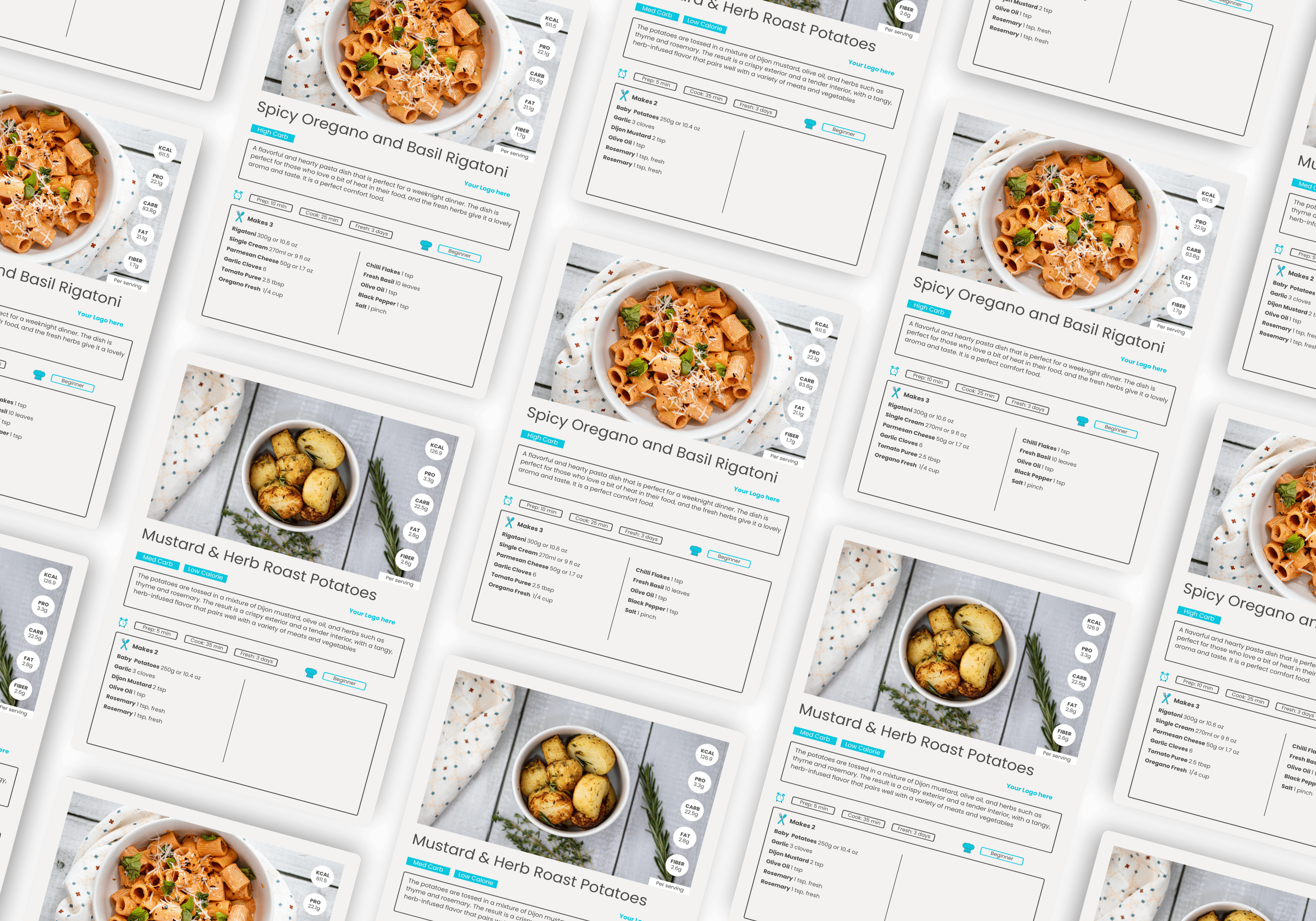
Branded recipe collections, professionally designed e-guides, structured onboarding packs, and clear written summaries of key concepts aren’t decorative. They are the deliverables clients can see, touch, and return to. They are the proof of the relationship between sessions. And in a world where clients are choosing between coaches with broadly similar credentials and protocols, they are often the deciding factor.
The coaches with the highest retention almost universally have one thing in common: their clients receive professional, considered materials throughout the relationship. Not because the materials are the work — but because they make the work visible.
Your coaching expertise is invisible to the client between sessions. The materials they receive are how the relationship continues to feel real and held when you’re not on a call together.
Practical changes to make this week
Five small operational changes that will move the needle on each of the five things above:
- Add three open-ended questions to your intake call that focus on emotion, not data — “What’s the hardest part of this for you?”, “What have you already tried?”, “What does success actually look like to you?”
- Audit your last five client communications. Are you delivering one clear takeaway per message, or are you packing in three points and creating decision fatigue?
- Choose one resource — a recipe collection, a guide, an onboarding pack — and elevate the design so that it visibly reflects your brand. White-label resources are the fastest way to do this without spending a week on Canva.
- Pick a fixed day and time for client check-ins, and stick to it for the next four weeks. Don’t wait until you have something to say. The ritual itself is the message.
- Start a one-line note for each client after every session capturing one specific thing they mentioned. Reference it next time you speak to them. Watch what it does to the relationship.
Frequently asked questions
Ask them, but ask better questions than the standard intake form. “What did you try before this that didn’t work, and why?”, “What does it look like when this is going well?”, “What’s the part you’re most worried about?” The answers reveal what the client is actually buying — which is rarely what they say at the start. Listen for the emotion underneath the deliverable.
Results matter, but they’re rarely the full story. Clients can achieve results and still leave a coach if the experience didn’t feel right. Conversely, clients often stay with coaches even when results are slower than expected, provided they feel understood, supported, and like progress is being made. Treating results as the whole game is a common reason high-skilled coaches lose clients to less technically capable competitors.
They are interdependent. Excellent coaching with poorly designed materials creates an inconsistent experience that undermines perceived value. Average coaching with excellent materials creates an inconsistent experience that erodes trust over time. The coaches with the highest retention pair both — sound coaching with materials that visibly match the standard of the work.
The research on perceived autonomy is clear: clients want to feel they made informed choices rather than being instructed. The practical move is to present options with context, recommend the one you’d choose, and let the client confirm. “Here are two ways we could approach this. I’d suggest option A because of X — does that make sense for you?” gives both clarity and autonomy. Pure instruction reduces both adherence and post-coaching maintenance.
Therapeutic alliance — the felt quality of the working relationship — is the strongest single predictor across the research. In practical terms, that means: the client feels understood, the communication is consistent and predictable, and the materials and structure of the coaching reinforce rather than undermine that relationship. Retention isn’t a single tactic; it’s the cumulative effect of these things working together.
Make the work between sessions feel as professional as the work in them
The Complete Coach Toolkit gives you the branded, evidence-based resources that turn the gaps between coaching calls into the part of your service clients actually talk about. Recipe books, e-guides, onboarding packs, and Canva templates — all developed by qualified nutritionists, all ready to brand as your own — so the materials your clients receive match the standard of the coaching itself.