
Someone can enjoy your posts, find your advice useful and still have no reason to get in touch. A lead magnet gives them a small, practical next step.
For a nutrition coach, that could be an e-guide that answers a question your audience keeps asking. For a personal trainer or online fitness coach, it might be a short guide to eating around training sessions. They receive something relevant to their situation. You have an opportunity to introduce your approach and, if they choose to hear more from you, continue the conversation.
The resource is only one part of it. How you introduce it, deliver it and follow up matters too.
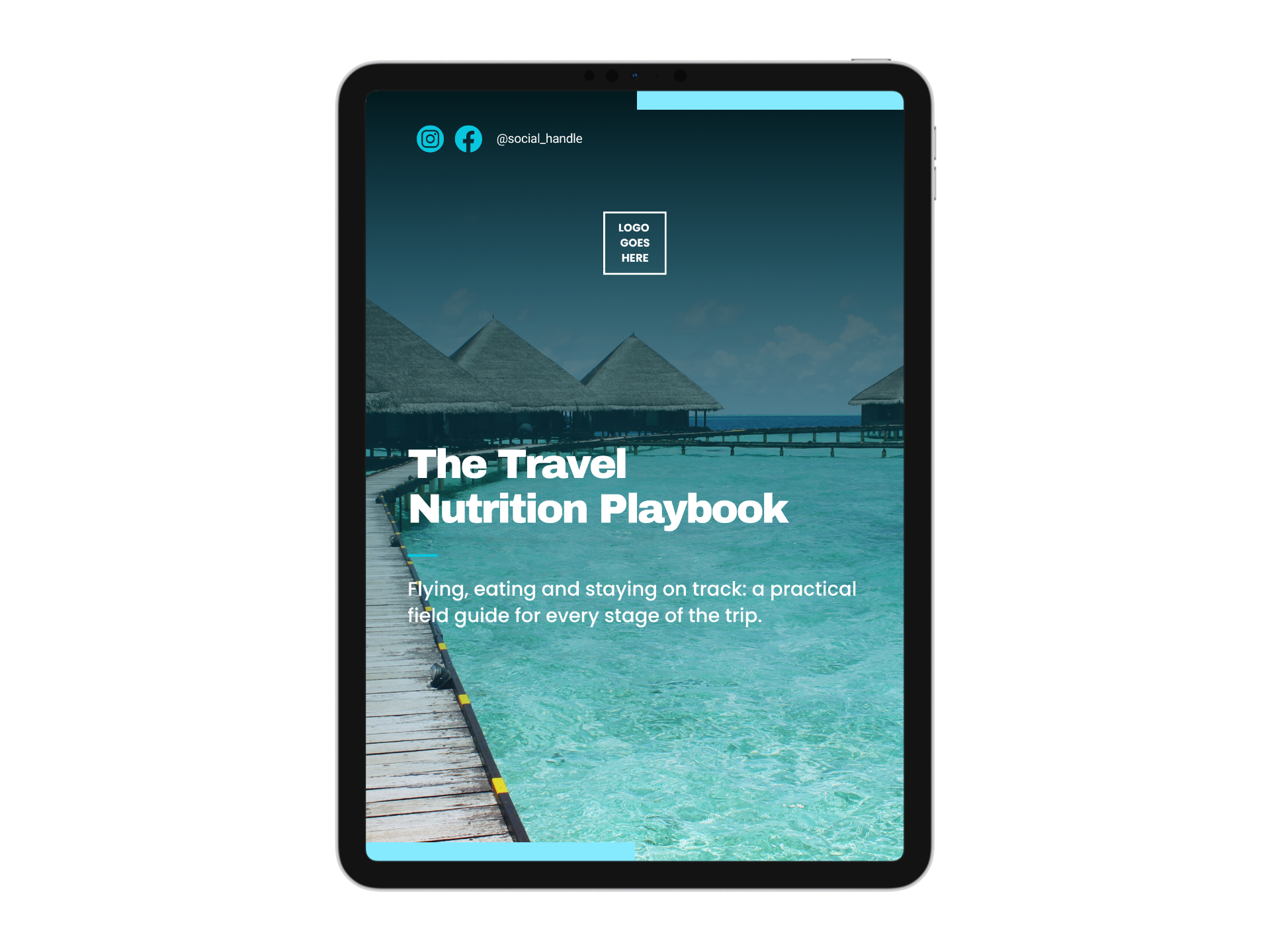
Let’s look at how that could work using The Travel Nutrition Playbook from our E-Guide Bundle. The guide is a real Content Cook resource; the coaching business, promotional copy and emails below are illustrative examples.
01 / What it means
What is a lead magnet?
A lead magnet is a free resource offered to potential clients, usually through a signup page where they provide their email address to receive it. You might also hear it called a free download or an opt-in resource.
An e-guide, checklist, short video or worksheet can all serve that purpose. The defining feature is the exchange: someone takes a deliberate step to receive help with something that interests them.
In this context, a “lead” is simply someone who has shown interest in your business. Downloading a guide does not tell you that they want coaching, can afford it or are ready to buy. It gives you a starting point for understanding what brought them to you.
For example, someone requesting a travel nutrition guide may be preparing for a holiday, travelling for work or looking for advice to share with their partner. Your follow-up can help you learn which.
A useful place to start
Choose a resource that answers a question your intended clients recognise. Then make it clear what they will receive and what happens after they request it.
02 / Why use one?
Give people a reason to take the next step
Booking a consultation can feel like a big commitment when someone has only just discovered your business. Requesting a relevant guide is a smaller decision.
It lets them explore a topic and get a feel for how you communicate before deciding whether they want personal support. For you, it creates several practical opportunities.
Make your content more useful
A social post can introduce an idea, but there is only so much room to develop it. An e-guide gives interested readers somewhere to go for more detail and something they can return to later.
Continue beyond a single post
When someone chooses to receive follow-up emails, you can build on the subject over time. You don’t have to fit every explanation, example and invitation into one Instagram caption.
Learn what your audience needs
The questions people reply with can be useful in their own right. You may discover that the difficulty you expected is different from the one they actually face. That can inform your next email, your content and the way you explain your coaching.
Introduce your service in context
A guide gives you a relevant starting point for discussing coaching. If someone is struggling to make nutrition fit around frequent travel, you can explain how your service supports that situation—provided it genuinely does.
None of this guarantees enquiries. A resource earns attention by being relevant and useful, and some readers will be happy with the free guide alone.
03 / Choose a relevant guide
Start with the people you want to coach
Before choosing a lead magnet, think about who your coaching is for and the situations they bring to you.
“People interested in nutrition” is a broad audience. “People whose working week regularly includes travel” gives you something more specific to work with.
For our example, imagine a coach who supports adults with busy schedules, including frequent work trips. Their audience often asks how to approach eating when their usual routine changes.
The Travel Nutrition Playbook, described in our collection as “a field guide for every stage of the trip”, is a relevant resource to consider for that audience.
The connection is straightforward: the guide introduces the topic; the coach’s service helps people apply suitable ideas to their own circumstances and review what happens over time.
Other audiences will call for different choices. Protein 101, the Hydration Guide and the MyFitnessPal Guide are also part of our collection. Choose by the question your audience needs help with, rather than whichever cover you happen to like best.
Read the guide before promoting it. Your signup copy should describe the actual resource, and your follow-up should reflect the advice you are comfortable discussing within your own scope of practice.
04 / Prepare it for your business
Make the resource feel like part of your service
With a prepared e-guide, you have existing content and a layout to work from. Your job is to review it, make appropriate changes and give it a clear place in your business.
Add your logo, colours and contact details. A short introduction can explain who you work with and why you have chosen to share this topic. Keep that introduction useful: readers came for the guide, so they shouldn’t have to work through a long sales pitch first.
Example introduction to adapt
If travel regularly changes the shape of your week, this guide gives you a place to start thinking about nutrition away from your usual routine.
I work with [accurate description of your clients]. As you read, consider which ideas fit your next trip and where you might need more individual support.
[Coach name]
Finish with one relevant next step, such as a link to your coaching information or an invitation to reply with a question. Check the exported PDF on your phone, test its links and remove any remaining template placeholders. Our Canva branding tutorial walks through the branding and export process.
White-label branding rights and permission to distribute a free lead magnet are separate questions, so check both for any resource you use. The Content Cook’s licence covers both: once a resource is branded, you can share it with coaching clients, sell it to your audience or give it away as a lead magnet. Share the finished PDF, keeping Canva source links private. Read the licensing terms.
If you are new to prepared resources, our white-label guide explains how they work. The example journey below assumes the necessary distribution permission is in place.
05 / Help the right people find it
Show the guide where the question comes up
You don’t need a complicated campaign to explain a useful resource. Start with content that addresses the same situation.
A coach could write a post about preparing for a work trip, discuss a common travel question in a video or add a link beneath a relevant blog article. In each case, the guide should feel like a helpful continuation of what someone is already reading.
Example social caption
Does your usual food routine change as soon as a work trip lands in the diary?
If you’re thinking ahead to your next trip, I’m sharing The Travel Nutrition Playbook—a guide to nutrition while travelling.
Find the details and request your copy through the link in my bio.
Send people to a page dedicated to the guide. Keep the main action clear, explain how delivery works and show the actual branded cover.
Free e-guide
Travelling soon?
Take a little guidance with you.
Request The Travel Nutrition Playbook, a field guide for every stage of the trip.
For people who want to think about nutrition when they’re away from their usual routine.
We’ll email you a link to the PDF.
I’d also like follow-up tips and information about [Coach name]’s coaching service. I can unsubscribe at any time.
Replace the example with wording that accurately reflects your delivery and email choices. Put the appropriate privacy information alongside the form and verify the requirements for the audience you serve before launch.
06 / Continue the conversation
What does “nurturing a lead” actually mean?
Nurturing means giving someone relevant help and a clearer understanding of your service over time. It can involve useful emails, replies to their questions and an invitation to explore coaching when it fits the conversation.
A download request is not a reason to send a sales pitch every morning. Follow through on what you promised, make the guide easy to use and give readers room to respond.
Here is a simple example sequence. The follow-up emails are for people who have chosen to receive them; the timing is illustrative, not a formula for getting enquiries.
First, deliver what they requested
Hi [First name],
Here’s your copy of The Travel Nutrition Playbook:
[Download your guide]
Save it somewhere you can find it before your next trip. As you read, note anything you would like to think through for your own plans.
If you have trouble opening the file, reply here and I’ll help.
[Coach name]
A few days later, make it personal
Ask a question that helps someone connect the subject to their own life. You are opening a conversation, not testing whether they read every page.
Hi [First name],
A short work trip and a family holiday can involve very different routines.
Before trying to plan everything, think about the part of your next trip that feels hardest to organise. Is it the journey, the working day or not knowing what will be available?
What kind of trip are you preparing for? You’re welcome to reply and let me know.
[Coach name]
Then explain where coaching could help
Give readers time to engage before introducing the service. Keep the invitation connected to the reason they requested the guide.
Hi [First name],
A guide can give you a starting point. Working out what fits your own schedule can raise further questions.
If travel is a regular part of your life and you’d like support with your nutrition, my coaching includes [accurate description of the support you provide].
You can read about the service, who it suits and how it works here:
[Explore coaching]
If you’re unsure whether it would suit you, reply with your question.
[Coach name]
Only describe support you actually provide. Include the relevant sender details and unsubscribe option in your marketing emails, and make sure someone answers replies. If a reader has already started a conversation with you, respond to that conversation rather than treating them as another scheduled message.
07 / Pay attention to what happens
Look beyond the number of downloads
A large download count doesn’t tell you whether the resource is reaching the people your coaching is designed for.
Track visits to the signup page, completed requests, successful email delivery, genuine replies and coaching enquiries. Define each consistently: an email reported delivered is not proof it was read, and an enquiry is different from a purchase.
Compare equivalent periods, allowing the same time for follow-up. Note where visitors came from and what you changed. A different audience or traffic source can affect the results as much as a revised headline.
Read the replies too. If people repeatedly ask the same question, that may be a useful subject for another email. If the download link is causing problems, fix delivery before writing more promotional posts.
You won’t always know which interaction led someone to enquire. They may have read your posts for months before requesting the guide. Use the information to make the experience more useful, rather than assigning certainty to every step.
08 / Find your starting point
Choose an e-guide that fits your audience
The Travel Nutrition Playbook is one example. The right topic for your business might be hydration, understanding protein or learning to use MyFitnessPal.
Our E-Guide Bundle brings together prepared educational resources with editable writing and layouts. You can review the material, add your branding and adapt it to the conversations you have with your audience and clients.
That gives you a starting point without having to write and design every page yourself. You still bring the judgement: which guide is suitable, how you will introduce it and what support you can offer afterwards.
Explore the collection, choose a topic your audience asks about and confirm the licence covers your intended distribution before building your campaign.
The E-Guide Bundle
Your next conversation.
A useful place to start.
Explore editable educational guides, including The Travel Nutrition Playbook, Protein 101 and the Hydration Guide. Find the topic that fits your audience.
Explore the E-Guide Bundle