
Most coaches think clients quit because they “lack motivation”.
That’s rarely the truth.
Most clients quit because Week 1 feels messy.
They do not know what to track, what matters, or how to win.
And when a client feels confused, they disappear.
Onboarding is not admin. It’s retention.
If you tighten your onboarding system, three things happen fast:
clients follow the plan sooner
check-ins get better
your time comes back
This post gives you a plug-and-play nutrition client onboarding checklist you can use immediately.
Why onboarding is where most coaches lose clients
Week 1 sets the tone.
If onboarding is unclear, clients assume the whole process will be unclear.
That creates:
constant WhatsApps and DMs
missed targets
inconsistent tracking
“I didn’t know what you meant” check-ins
early drop-off
Early churn is expensive.
Not just financially. It kills momentum, confidence, testimonials, and referrals.
It also turns your coaching business into a reactive support desk.
The fix is simple.
Give every client the same onboarding runway.
The goal of nutrition client onboarding (what you’re really building)
Onboarding is not about dumping information.
It’s about building four things:
Clarity: what to do, when to do it, how to measure it
Boundaries: how communication works so you are not always “on”
Buy-in: why the plan matters and what success looks like in Week 1
A repeatable system: so your delivery scales past 20 clients without chaos
If you only remember one line, make it this:
A good onboarding process protects your time and improves adherence.
The Ultimate Nutrition Client Onboarding Checklist
This checklist is split into phases so you can run it like a system.
No guesswork. No reinventing the wheel.
Phase 1: Before the client starts (24–48 hours pre-start)
This is where you remove confusion before it begins.
Send these immediately:
Welcome message with a clear “Start Here” link
Coaching agreement or terms (what’s included, what’s not)
How communication works:
preferred channel
response window
when you are available
How check-ins work:
check-in day
submission deadline
what happens after they submit
Intake form (goals, barriers, schedule, food preferences, allergies)
Data to collect (pick only what you use):
scale weight (optional)
photos (optional)
steps
training sessions
sleep
nutrition tracking method (macros or portions)
Business note:
This phase reduces “back-and-forth” messages, which quietly crush your true hourly rate.
Phase 2: Day 1 (the orientation)
Day 1 is not about perfection. It’s about alignment.
Your job is to make the first week feel achievable.
Cover these on Day 1:
Confirm the goal in one sentence (simple beats motivational)
Confirm the tracking style:
Macros for detail and control
Portions/plates for simplicity and adherence
Set the Week 1 target outcome:
“We’re building consistency first.”
Set 1–2 keystone habits (maximum):
protein anchor at 2 meals per day
steps target
hydration baseline
Clarify the non-negotiables:
check-in day
logging expectations
“message me when…” rules (so you do not get flooded)
Key point:
Clients do not need more instructions. They need fewer decisions.
Phase 3: Week 1 (make adherence easy)
Week 1 should feel like a guided path, not a test.
The faster the client can execute, the faster they believe in the process.
What to give them in Week 1:
A simple meal framework:
2–3 meal templates they can repeat
snack rules
portion guide or macro targets
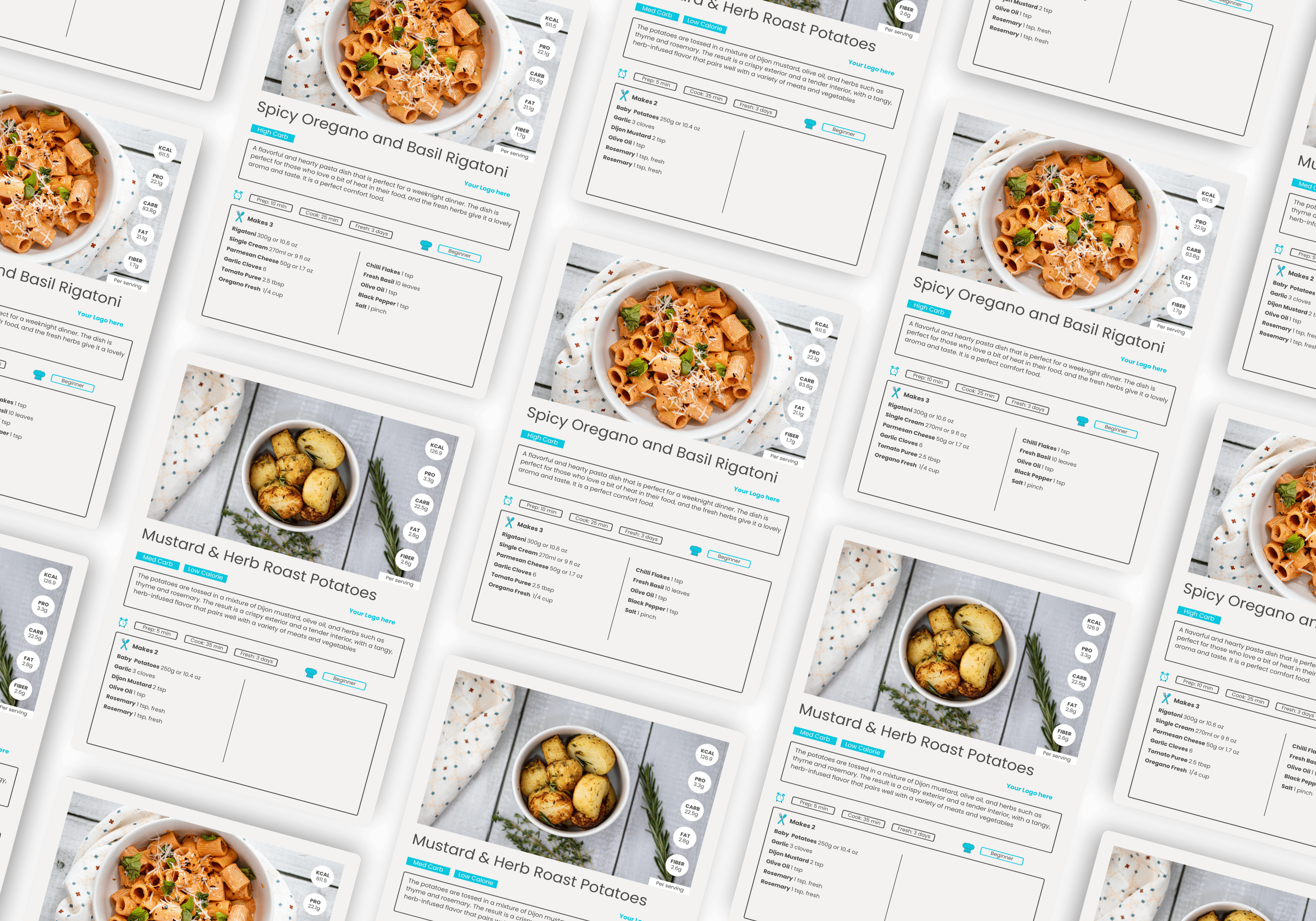
A starter recipe pack that matches their goal
A shopping list or “always have these foods” list
A troubleshooting sheet:
cravings
eating out
weekends
travel
low appetite or stress
Business note:
Every “what do I do in this situation?” resource saves you time later.
It also improves compliance without extra coaching hours.
Phase 4: The first check-in (where retention is won)
Most check-ins are messy because clients do not know what to report.
So they send:
vague updates
emotional summaries
missing data
questions with no context
Fix it with a structured submission.
Your check-in should collect:
body weight trend (optional)
steps average
training sessions completed
nutrition adherence (how many days hit the target)
main wins
main blockers
1 question they want answered
Your job in the first check-in:
reinforce one win
identify one bottleneck
adjust one variable only
confirm the next 7-day plan
This one rule changes everything:
One change at a time. Otherwise clients feel like they are failing.
Phase 5: The onboarding assets that make this scalable
If you want to scale, you need assets that do the heavy lifting.
Here are the minimum assets that create a professional client experience:
Start Here page
Welcome guide
Check-in template
Starter recipe pack
Common scenarios guide (weekends, eating out, cravings)
This is how you avoid rebuilding the wheel with every new client.
Common onboarding mistakes that create admin and churn
If onboarding feels heavy, clients stall.
If it feels unclear, clients drift.
Avoid these traps:
Too much information on Day 1
Clients will not read a textbook.
No boundaries
“Message me anytime” becomes “message me always”.
No Week 1 definition of success
Clients need an early win.
Over-personalising immediately
Swapping meals and writing custom plans from scratch sets the wrong expectation.
No system for check-ins
Without structure, you will spend hours untangling updates.
Onboarding should feel simple, clear, and repeatable.
Copy-and-paste onboarding flow (steal this)
Here’s a simple message sequence you can copy into your coaching process.
Message 1: Welcome + Start Here
“Welcome aboard. Here’s your Start Here page with everything you need for Week 1. Your check-in day is ___, and you’ll submit by ___.”
Message 2: Intake Form + Deadlines
“Complete your intake form by ___. Once that’s in, I’ll confirm your targets for Week 1.”
Message 3: Day 1 Targets
“Your focus this week is consistency. Targets: ___ steps, ___ protein, tracking method: ___. Keep it simple and repeatable.”
Message 4: Week 1 Resources
“Here’s your starter recipe pack and your eating-out guide. Use these to reduce decision fatigue.”
Message 5: Check-in Reminder
“Check-in is due ___. Use this form so I can review quickly and give you a clear plan for the next 7 days.”