
If you have ever quoted a potential client and immediately wondered whether you should have charged more — or worse, dropped your price before they even pushed back — this post is for you.
Undercharging is one of the most common and most costly habits in the nutrition coaching industry. It is not a pricing problem. It is a confidence and positioning problem. And the good news is that both are fixable.
This guide walks you through how to build and price nutrition coaching packages in 2026 that reflect the value you actually deliver — and how to back that value up so that premium pricing feels justified to you and your clients.
Why most nutrition coaches undercharge
The reasons are almost always the same, and none of them are about the market not being able to afford it.
- Comparing prices with underpriced competitors rather than benchmarking against outcomes
- Charging for time rather than transformation — the hourly mindset in a package world
- Thin or inconsistent client materials that make the service feel less substantial than it is
- Lack of a clear package structure, so clients are not sure what they are paying for
- Fear of objection, leading to pre-emptive discounting before a client even asks
The market for nutrition coaching is not price-sensitive. It is value-sensitive. When your offer is clear, your materials are professional, and your outcomes are communicated well, price becomes a much smaller barrier than most coaches expect.
How to structure your packages before you price them
Pricing without structure is guesswork. Before you set a number, you need to know exactly what each package includes, what outcome it is designed to produce, and who it is for. That clarity is what makes pricing defensible — to yourself and to clients
The three-tier framework
These are realistic ranges based on current market positioning. Where you sit within each range depends on your credentials, niche, track record, and — critically — the quality of your client experience.
| Package type | Duration | Inclusions | Price range |
|---|---|---|---|
| Starter / intro | 4 weeks | Check-ins + guide | $250–$400 |
| Core package | 8–12 weeks | Check-ins, recipe book, e-guides | $600–$900 |
| Premium package | 3–6 months | Full content suite, calls, reporting | $1,200–$2,000 |
| Monthly subscription | Rolling | Ongoing check-ins + fresh content | $250–$450 / mo |
Most coaches benefit from offering three tiers: a starter package for lower-commitment clients or those new to coaching, a core package that represents the bulk of your work, and a premium package for clients who want the full experience. Here is how that typically maps out in 2026:
What justifies a premium price
Premium pricing is not about charging more for the same thing. It is about making the value legible — to clients who are evaluating whether to invest, and to yourself when you are deciding what to charge.
Three things move the needle more than anything else:
1. Your credentials and authority
A qualified sports nutritionist or registered dietitian can and should charge more than a coach with a weekend certification. Your SENr registration, your degree, your years of practice — these are value signals. Make sure they are visible on your website, in your bio, and in the materials you send clients.
2. The client experience you deliver
Clients cannot evaluate your nutrition knowledge before they hire you. What they can evaluate is how professional, organised, and considered your service feels. A polished onboarding pack, high-quality recipe resources, and well-designed education guides signal that you run a serious operation — before a single coaching call takes place.
This is the single biggest lever coaches leave untouched. The coaching content might be excellent, but if the supporting materials look thrown together, the perceived value drops.
3. Specificity of your niche and outcomes
A coach who works with “anyone who wants to be healthier” will always struggle to command premium prices. A coach who works specifically with female endurance athletes navigating body composition, or with busy professionals who need sustainable fat loss without tracking macros obsessively, can charge significantly more — because the offer speaks directly to a defined problem.
Niche specificity also reduces price comparison. If your offer is specific enough, there is no direct competitor to compare against.
The most common objection coaches face is not ‘that’s too expensive.’ It’s ‘I’m not sure what I’m getting.’ Fix the clarity, and the pricing conversation changes completely
How to present your pricing with confidence
Price presentation matters almost as much as the price itself. A few principles that make a consistent difference:
Lead with outcomes, not deliverables.
“Eight weeks to better energy, improved body composition, and a sustainable approach to eating” lands differently than “eight weekly check-in calls and a meal plan.” Both describe the same package. One sells the transformation; one lists the tasks.
Anchor high before you present.
If you offer multiple tiers, present your premium option first. This sets a reference point and makes your core package look like excellent value by comparison.
Do not apologise for your price.
Hedging language — “it’s quite a lot but…” or “I know it might seem expensive” — signals that you do not believe the price is fair. State it clearly, let it land, and then stop talking.
Have a clear answer to 'what's included?'
Vague packages invite price negotiation. Specific packages with named deliverables — recipe books, e-guides, weekly check-ins, a branded onboarding pack — are harder to push back on because the client can see exactly what they are getting.
The role of professional content in pricing
There is a direct relationship between the quality of your client-facing materials and the price you can confidently charge.
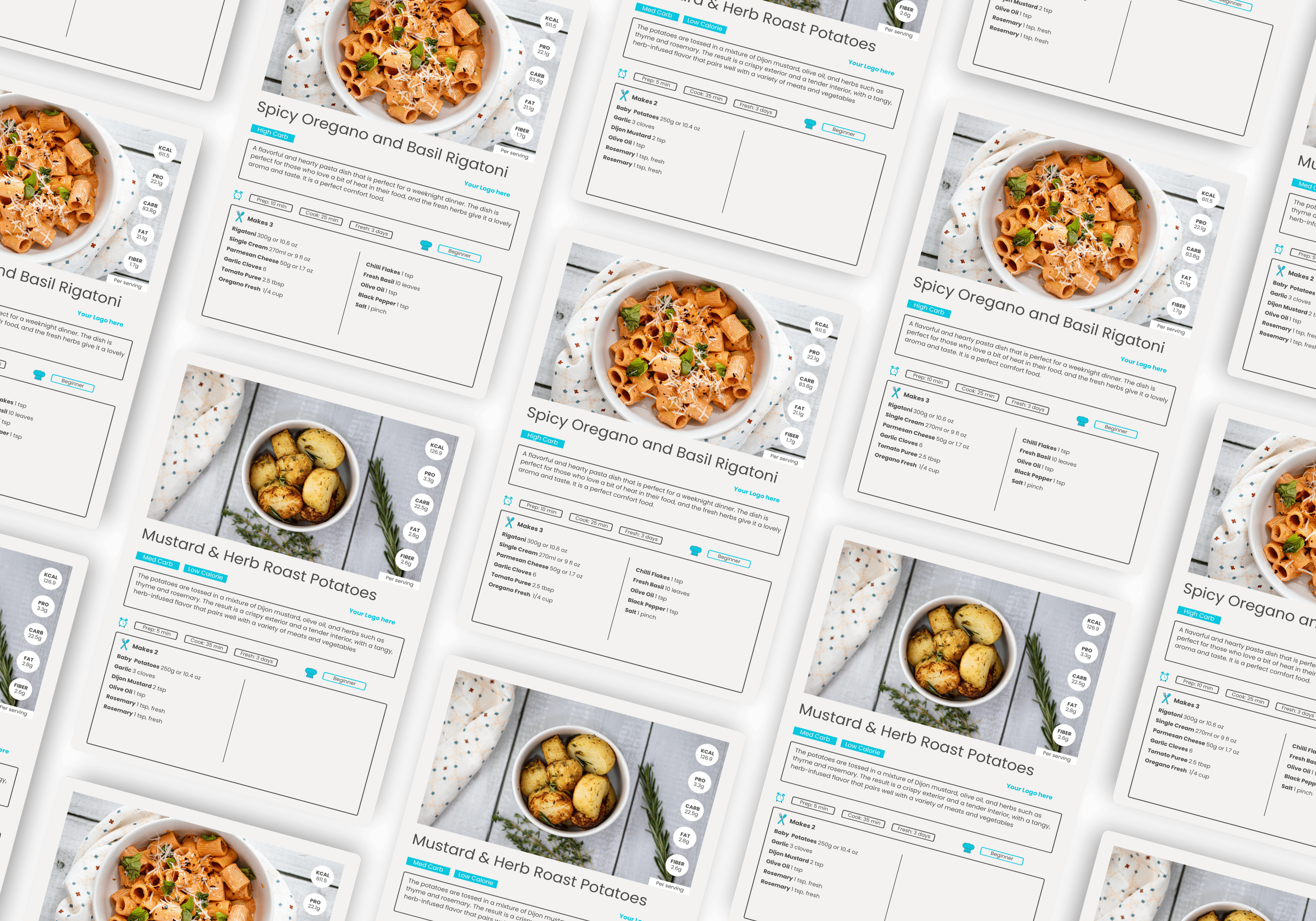
When a new client receives a professionally designed welcome pack, a branded recipe book, and a well-structured education guide on their first day, they are not just getting useful content. They are receiving a signal that this coach runs a professional, considered operation. That signal sticks — and it justifies a higher price tag than a coach who sends a Google Doc and a WhatsApp message.
This is not about aesthetics for the sake of it. It is about making the value of your service tangible at the moment a client is deciding whether it was worth the investment.
The coaches who charge the most are not always the most technically knowledgeable. They are the ones who have built a service that looks and feels premium at every touchpoint.
You do not need to create professional content from scratch. You need to deliver it consistently. White-label resources that you brand as your own give you the materials to do that without the hours of creation.
A note on raising your prices
If you are reading this having already undercharged for some time, the path forward is straightforward even if it feels uncomfortable.
You do not need to justify a price increase to existing clients, though a brief note explaining that your rates are changing from a given date is professional practice. For new clients, simply start charging the right rate from your next inquiry.
The most important thing is to stop negotiating against yourself. Quote the price, be quiet, and let the client respond. Most of the resistance to premium pricing exists in the coach’s head, not in the client’s budget.
Frequently asked questions
Starter packages typically run $250–$400 for four weeks. Core 8–12 week packages range from $600–$900. Premium packages spanning three to six months with a full content suite are commonly priced at $1,200–$2,000. Monthly subscription models tend to sit at $250–$450 per month. Where you sit within these ranges depends on your credentials, niche, track record, and the quality of your client experience.
If clients consistently say yes without hesitation, if you feel resentful of the work relative to what you’re earning, or if your current rate does not cover your time, tools, and ongoing development — these are strong signals. A useful benchmark: your effective hourly rate (total income divided by total hours including admin and content creation) should feel sustainable and reflective of your expertise.
Package pricing is almost always more effective for both the coach and the client. It removes the time-for-money ceiling, encourages clients to commit to a full programme rather than individual sessions, and allows you to price based on the outcome rather than the input. Hourly pricing also inadvertently penalises efficiency — the better and faster you get, the less you earn per client.
Significantly. Clients cannot evaluate your nutrition knowledge before hiring you — but they can evaluate how professional your service looks and feels. High-quality branded resources, a polished onboarding experience, and well-designed educational content all raise perceived value and make premium pricing easier to justify and defend.
Ready to reclaim your time?
The Complete Coach Toolkit gives you everything you need to deliver professional, branded nutrition content to your clients — without the hours of creation. Recipe books, e-guides, Canva templates, and more, all developed by qualified nutritionists and ready to brand as your own.