
5 Ways to Package White-Label Nutrition Content for High-Ticket Clients
If you’re selling high-ticket coaching, your delivery has to look high-ticket too.
Not because your clients need more PDFs.
Because they need less decision fatigue, more structure, and a clear path to results.
Here’s the trap.
Most coaches try to “justify” a premium price by adding more custom work. More meal plans. More resources. More admin.
That works for a month. Then your calendar fills up, check-ins swallow your weekends, and your true hourly rate falls off a cliff.
High-ticket is not about doing more. It’s about packaging better.
This is where white-label nutrition content becomes the smartest lever you can pull.
What white-label nutrition content actually is (in plain English)
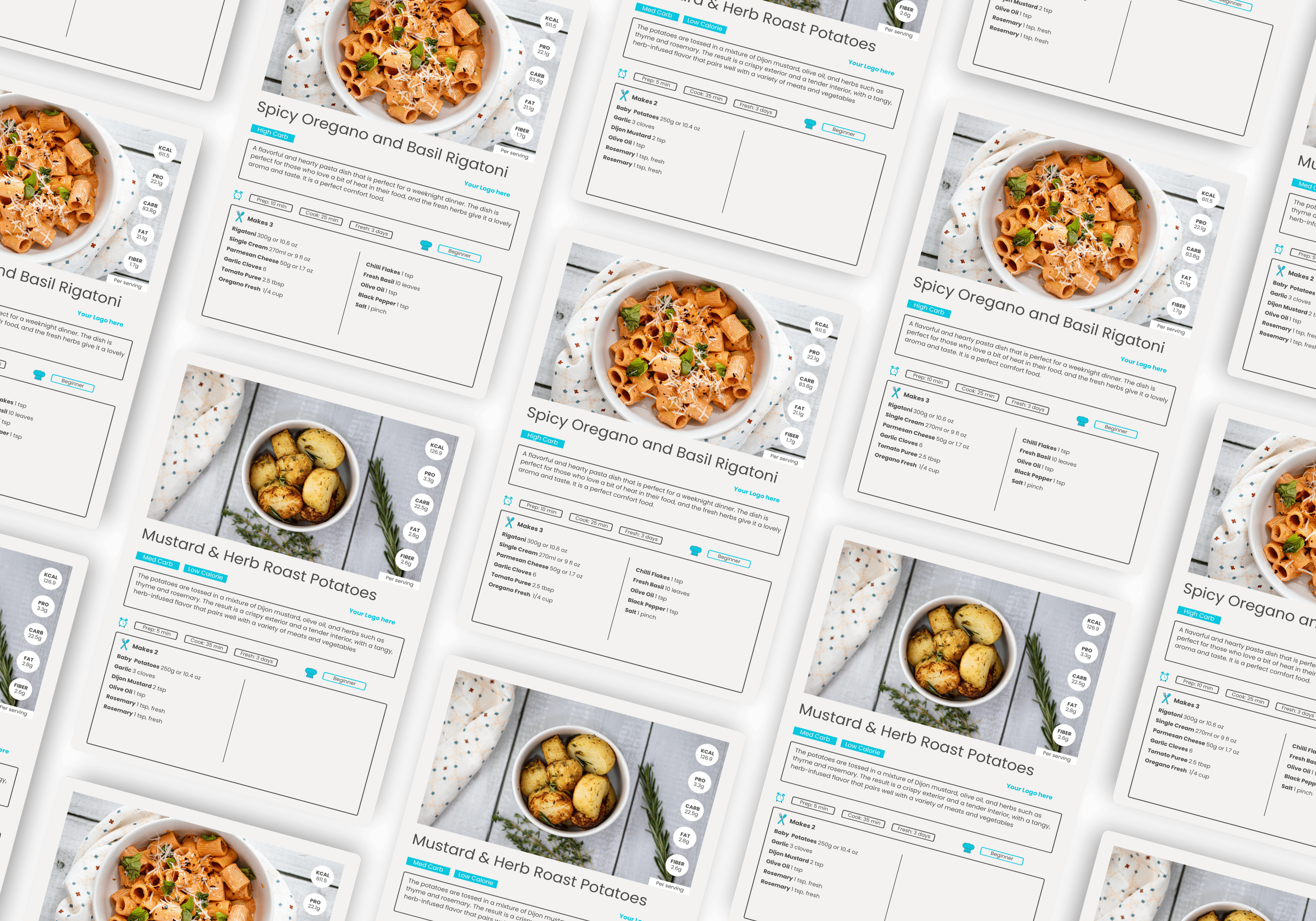
White-label nutrition content is client-ready resources you can brand as your own.
That includes things like:
recipe packs
client education guides
onboarding handbooks
trackers, check-in sheets, and frameworks
The win is simple.
You stop creating everything from scratch, and you start delivering a repeatable client experience that feels premium.
Why this matters for high-ticket coaches
When you sell premium coaching, clients are buying:
confidence
clarity
structure
accountability
They are not buying your ability to type up another meal plan.
High-ticket clients want to feel like they are stepping into a system.
And for you, the business owner, packaging content properly improves:
delivery speed
client adherence
perceived value
retention
your true hourly rate
This is how you scale without adding hours.
The rule that changes everything: Standardise 80%, personalise 20%
Most “personalisation” in coaching is fake personalisation.
Swapping chicken for turkey is not coaching.
It’s admin.
Real coaching is:
behaviour change
problem solving
consistency under pressure
decision-making in real life
So here’s the model.
Standardise 80% of your delivery, so you can personalise the 20% that actually moves the needle.
Now let’s get practical.
5 Ways to Package White-Label Nutrition Content into High-Ticket Offers
1) The Premium Onboarding Vault
Best for: 1:1 high-ticket coaching, transformation programs, new client starts.
If your onboarding feels messy, you lose trust early.
A high-ticket onboarding vault fixes that. It makes clients think:
“Wow. This is organised. This coach has a system.”
What to include:
A “Start Here” roadmap (how check-ins work, what to track, what matters)
A client expectations guide (boundaries stop churn)
A simple macro or portion framework
A recipe pack matched to their goal
A “What to do when…” troubleshooting guide (cravings, weekends, eating out)
Why it works:
clients follow the plan faster
fewer repetitive questions
fewer “I wasn’t sure what to do” messages
Immediate takeaway:
Create one onboarding vault today, then reuse it for every new client. Update it quarterly, not weekly.
2) The Weekly Implementation Pack
Best for: clients who need structure, consistency, and direction between calls.
This is how you deliver “high-touch” without being constantly available.
You send a weekly pack that gives clients a focus, a plan, and guardrails.
What to include:
1-page weekly focus (example: “protein consistency” or “weekend strategy”)
5–10 recipes for the week (with swaps)
a shopping list
one habit target
one “if this happens, do this” rule
Why it works:
clients stop improvising
check-ins get better
adherence improves without extra coaching time
Immediate takeaway:
Write 4 weekly packs once (one per week of a month) and rotate them.
3) The Client Resource Library (Retention Builder)
Best for: long-term coaching, semi-private coaching, memberships.
Retention is rarely about results alone.
It’s about clients feeling supported between touchpoints.
A resource library gives them that.
What to include:
recipe packs organised by goal (fat loss, high-protein, low-carb, budget-friendly)
education guides (macros basics, eating out, alcohol, cravings, mindset)
quick tools (snack list, travel guide, “what to order at…” sheet)
Why it works:
clients stop relying on you for every small decision
it feels like they’re “getting more” each month
it reduces churn because the value is always visible
Immediate takeaway:
Make a “Library Index” page. Clients should never be guessing where to find things.
4) The Transformation Toolkit (High Perceived Value, Low Extra Work)
Best for: premium 12-week offers, body recomposition, postnatal, Hyrox prep, photoshoot prep.
This is the offer where coaches often burn out.
Because they try to over-deliver manually.
The toolkit fixes it.
What to include:
a simple phase roadmap (Weeks 1–4 foundations, 5–8 momentum, 9–12 refinement)
a weekly meal-building framework
a recipe pack per phase
a “plate method” option for non-trackers
a “how to handle social events” guide
a check-in template so clients report the same way every time
Why it works:
clients feel guided
your coaching becomes sharper because the system handles the basics
you spend calls coaching, not explaining
Immediate takeaway:
Create one toolkit for your flagship offer. Make it your signature.
5) The Group or Corporate Pack (Repeatable Revenue)
Best for: gym partnerships, team coaching, workplace wellness, school programs.
Group offers fail when delivery becomes chaotic.
This pack keeps it clean.
What to include:
a weekly lesson email (nutrition concept + action step)
a recipe pack suited to a broad audience
a shopping list and snack list
a habit tracker
a “common pitfalls” guide
Why it works:
you can deliver to 20–200 people without reinventing anything
the program runs like a machine
it creates upsell paths into 1:1
Immediate takeaway:
Build one 4-week group pack. Sell it repeatedly.
What to include in every premium package (so it feels high-ticket)
Here’s the checklist.
If your package has these elements, it will feel premium even before results happen.
High-ticket package checklist:
Start Here page (removes confusion)
Clear weekly structure (removes decision fatigue)
Nutrition framework (macros or portions)
Recipe support (matched to goal)
Real-life guides (eating out, weekends, cravings)
Tracking tools (habit tracker or check-in template)
One central hub (Notion, PDF index, client portal)
If clients can’t find things quickly, they won’t use them.
Organisation is part of the product.
How to price this without undercharging
Price based on outcomes and delivery experience.
Not file count.
A premium offer is premium because:
it reduces friction
it simplifies decisions
it gives clients a system they can follow without constant support
You can offer tiers like:
Standard: calls + check-ins
Premium: calls + check-ins + toolkit + library
VIP: premium + more touchpoints
Your goal is not to “add more work.”
Your goal is to increase perceived value while protecting delivery time.
Where most coaches mess this up
These are the mistakes that quietly kill scale.
They over-customise. Every client becomes a new project.
They dump resources with no system. Clients get overwhelmed and ignore it.
They build everything from scratch. Content creation eats the business alive.
They confuse personalisation with coaching. Swaps are not strategy.
The fix is simple.
Standardise your delivery layer. Coach the human.
Your next step (if you want to implement this this week)
Pick one package and build it in the next 60 minutes.
Start with the highest leverage one:
Premium Onboarding Vault for 1:1
Client Resource Library for retention
Transformation Toolkit for high-ticket programs
Then ask yourself one question:
What am I currently recreating every week that could be a reusable asset?
That’s the bottleneck.
That’s the fix.
CTA: Want to deliver premium content without building it all yourself?
If you want to stop writing resources from scratch and start delivering a repeatable client experience, that’s exactly what The Content Cook is built for.
Browse the recipe packs and ready-to-use client guides, brand them in minutes, and plug them straight into your high-ticket offer.