
The Coach’s Communication Problem
Every coach knows the look. You start explaining energy balance, and the client’s focus fades fast. You talk about metabolism, calorie deficits, or adaptive thermogenesis, and suddenly you are the teacher in a classroom nobody signed up for.
The issue is not that clients lack interest. It is that most explanations fail to connect science to their daily habits. They want clarity, not a lecture. They want to know why their progress has slowed or how to make better choices without tracking every number.
Many coaches confuse complexity with authority. They explain energy balance as they learned it in textbooks, not as clients need to hear it. They talk in equations instead of examples and in metabolic terms instead of relatable experiences. The result is confusion, not clarity.
When a client says, “But I eat healthy, so why am I not losing weight?”, the real problem is not their diet—it is the coach’s communication. Understanding the science is one skill. Translating it into language that sticks is another.
In the next section, we will look at what energy balance really means and why clients so often misunderstand it.
What Energy Balance Really Means (and Why Clients Misunderstand It)
At its core, energy balance is simple. When the body takes in more energy than it burns, it stores the excess as fat. When it burns more than it takes in, it uses stored energy and body weight decreases. Every coach knows this, yet it remains one of the hardest concepts for clients to grasp.
The problem is perception. Clients often believe that “eating healthy” automatically leads to weight loss. They focus on food quality rather than quantity. They might swap processed snacks for natural ones, but still consume more calories than they expend. When the scale does not move, they assume something must be wrong with their metabolism.
Another issue is that “calories in versus calories out” sounds too simplistic. Clients hear it and think it reduces their effort or lifestyle to a math equation. They feel dismissed when told to “just eat less and move more.” The phrase is accurate but incomplete. Energy balance includes all the processes that influence intake and expenditure: hunger hormones, movement, digestion, and even sleep quality.
Coaches need to show clients that energy balance is not a rigid rule but a dynamic system. What clients eat affects how they feel and move, and how they move affects how much they want to eat. It is an adaptive cycle, not a static equation.
In the next section, we will look at the science that shapes this cycle and how to explain it without losing your client’s attention.
The Science: Why Energy Balance Isn’t Just About Calories
Energy balance sounds simple, but the processes behind it are complex. Every coach knows that a calorie deficit leads to fat loss, yet not all clients experience results in the same way. This is because energy balance involves several moving parts that interact constantly.
Total daily energy expenditure (TDEE) has four main components:
Basal Metabolic Rate (BMR)
The energy needed to keep the body functioning at rest. This accounts for about 60–70% of daily energy use.
Thermic Effect of Food (TEF)
The energy used to digest, absorb, and metabolize nutrients. Protein has the highest TEF, followed by carbohydrates and fats.
Exercise Activity Thermogenesis (EAT)
The energy burned during planned exercise, such as lifting weights or running.
Non-Exercise Activity Thermogenesis (NEAT)
The calories burned through daily movement, like walking, fidgeting, or standing. NEAT varies drastically between individuals and can change depending on energy intake.
When clients diet for long periods, their bodies adapt. BMR can decrease slightly as the body becomes more efficient, but the biggest drop often comes from NEAT. People unconsciously move less when eating less, which lowers total expenditure. This is why progress slows even when calorie intake remains the same.
Clients also need to understand that energy intake is not perfectly measurable. Tracking errors, label inaccuracies, and portion estimation can easily create a 10–20% swing in reported calories. Over time, these small inaccuracies can make a big difference in outcomes.
The key for coaches is to frame these points without losing the client’s attention. Avoid phrases like “metabolic adaptation” or “thermogenesis” in conversation. Instead, use simple analogies.
For example, describe metabolism as a thermostat: when the body senses less fuel, it turns the temperature down to conserve energy. Or compare calories to a budget—if you earn less, you spend less. These visuals make the science relatable and help clients grasp why small changes in activity or food intake matter.
In the next section, we will look at how to translate this science into clear, practical conversations that help clients take action.
Turning Science Into Client Conversations
Knowing the science of energy balance is one thing. Explaining it in a way that creates action is another. Coaches need to make this concept tangible, relatable, and simple enough for clients to repeat back in their own words.
Start by focusing on what matters most to the client: their goal and their habits. Avoid starting with numbers or formulas. Instead, use examples drawn from daily life. For instance, say, “Your body is like a bank account. Calories are the deposits and withdrawals. If more goes in than out, you store the extra. If more goes out than in, you draw from your savings.” Clients understand the logic instantly because it connects to something familiar.
Keep explanations short. One clear analogy works better than five technical terms. Replace “metabolic adaptation” with “your body learns to do more with less energy when you diet.” Replace “thermogenesis” with “your body burns some energy just by processing food.” These phrases communicate the same idea without overwhelming the listener.
Encourage questions to check understanding. If a client cannot explain energy balance back to you, they have not absorbed it yet. Ask, “How would you explain this to a friend?” Their response shows you what clicked and what needs more work.
Finally, use visuals whenever possible. Show them portion comparisons, food swaps, or example meal layouts. Seeing how energy balance works makes it easier to understand than hearing a list of numbers or terms.
In the next section, we will look at common communication mistakes coaches make when teaching energy balance and how to fix them.
Common Coaching Mistakes (and Better Alternatives)
Even skilled coaches make communication errors when teaching energy balance. These mistakes usually come from good intentions, trying to sound credible or prove expertise, but they often make the message harder to absorb.
Mistake 1: Leading with the science instead of the story.
Many coaches start conversations with metabolic equations or calorie breakdowns. Clients do not need that level of detail at first. They need a clear picture of how their habits connect to outcomes. Begin with a simple story or analogy that sets context, then layer in science later if the client shows interest.
Mistake 2: Assuming understanding.
After explaining energy balance once, it is easy to assume the client understands it. But understanding is not the same as agreement or application. Revisit the concept regularly, using different examples. A client might grasp the idea of a calorie deficit one week but forget it when stress or social events affect their habits.
Mistake 3: Ignoring emotional and behavioural context.
Energy balance is not just about numbers. Clients eat for reasons that go beyond hunger — stress, routine, social settings, or emotions. Coaches who focus only on data risk missing the bigger picture. Teaching clients to manage emotional eating or plan around social meals makes the science relevant to real life.
Mistake 4: Over-reliance on tracking.
Calorie tracking is a useful tool but not the only one. Many clients become dependent on the app instead of developing awareness. Use tracking as a short-term learning phase, then move toward portion estimation or mindful eating. Clients who can self-regulate without technology have truly understood energy balance.
Mistake 5: Talking about metabolism as if it is fixed.
Phrases like “your metabolism is slow” can create frustration and helplessness. Instead, teach clients that metabolism is adaptable and responsive. Encourage them to see progress as a moving target, influenced by activity, sleep, and consistency.
Frame energy balance as a skill, not a rule. When clients view it as something to practice rather than a rigid system to follow, they engage with it long term. Every conversation should aim to increase understanding and build self-trust, not dependence on the coach.
In the next section, we will look at practical ways to teach energy balance so it sticks — using visuals, repetition, and simple coaching frameworks.
Actionable Strategies for Coaches
Understanding energy balance is only useful if clients can apply it. Coaches who want the message to stick need to use simple, practical teaching methods that turn science into habit.
Teach visually.
Visuals make abstract ideas real. Use food comparisons, portion plates, or “energy in vs. energy out” graphics. For example, showing that a handful of nuts and a bowl of oats contain similar calories helps clients see why portion size matters. The Smart Food Swaps template works well here because it reinforces energy balance through visual repetition.
Use repetition.
Clients need to hear the same concept several times in different ways before it becomes second nature. Revisit energy balance in check-ins. Connect it to daily examples like eating out, social events, or recovery nutrition. Consistency in messaging builds understanding and trust.
Link data to behaviour.
If a client tracks food or steps, use that data to show how small adjustments change outcomes. For example, highlight how walking an extra 2,000 steps per day can increase calorie expenditure enough to restart progress. Relate numbers to actions, not statistics.
Replace blame with curiosity.
When progress slows, avoid phrases like “you are not in a deficit.” Instead, guide clients to explore why their balance might have shifted. Did stress increase? Did activity drop? This turns setbacks into problem-solving moments, not shame-based discussions.
Build autonomy.
Your goal is to create clients who no longer rely on you to understand energy balance. Once they grasp the principles, move them toward self-regulation. Teach them to estimate portions, recognize hunger signals, and manage energy intake across the week without strict tracking.
Provide ready-made resources.
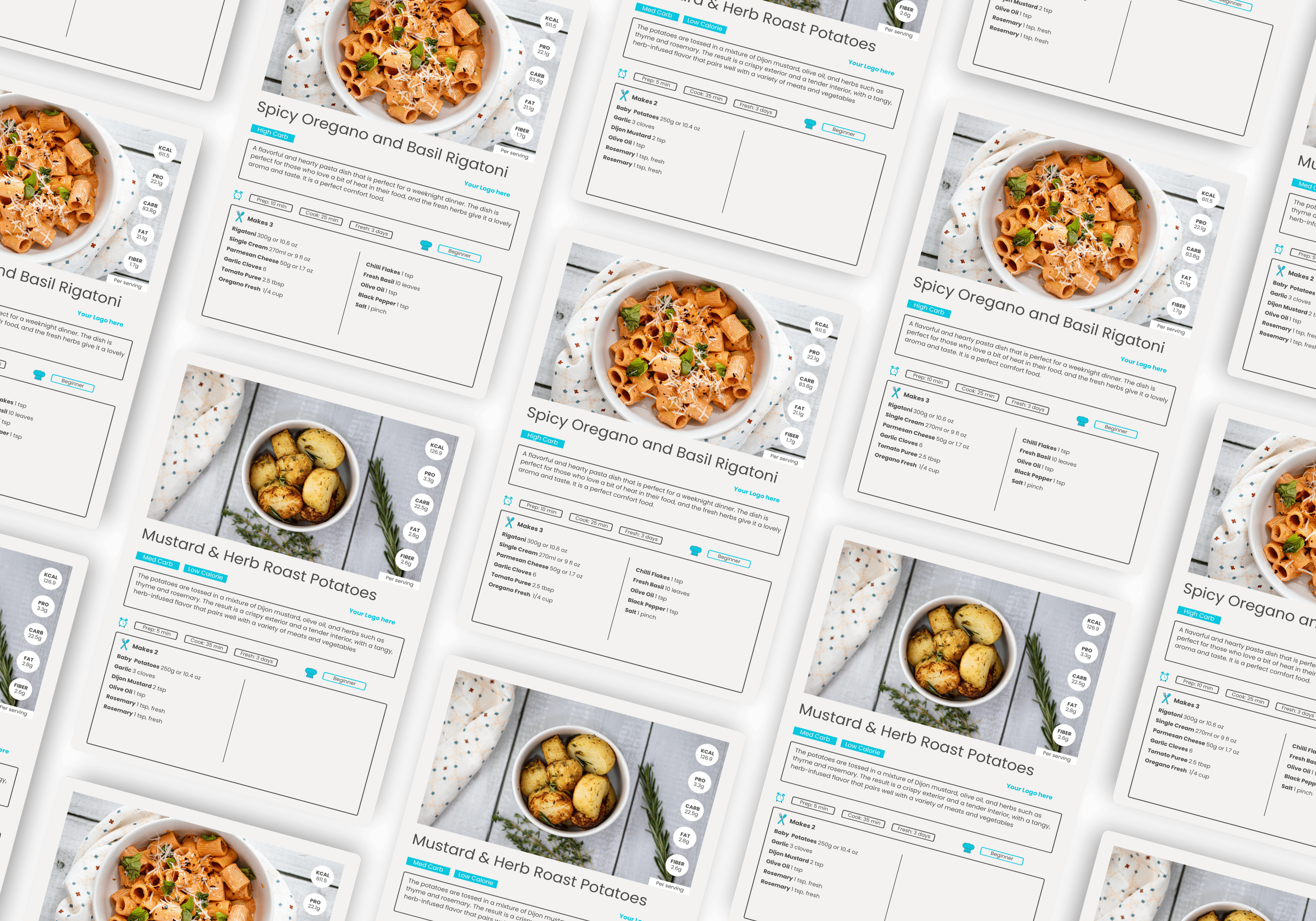
Use visuals, guides, and recipe books to reinforce your teaching. When clients see consistent messaging across materials, they absorb it faster. It also saves you time and gives your brand a polished, professional look.
Energy balance should feel practical, not theoretical. The more you connect it to real food, real life, and repeatable habits, the more your clients will understand and act on it.
In the final section, we will summarize how clarity and simplicity build trust — and why great coaches focus less on sounding smart and more on helping clients think clearly.
The Coach’s Edge Lies in Clarity
The best coaches are not the ones who know the most; they are the ones who can explain the complex in a way clients actually remember. Energy balance is a perfect example. It is simple on paper but misunderstood in practice. The difference between confusion and comprehension comes down to clarity.
Clarity builds trust. When clients understand why their progress changes, they stop guessing and start acting. They stop blaming metabolism or genetics and begin to see how choices, movement, and consistency connect. That shift is what separates short-term compliance from long-term success.
Teaching energy balance well does not mean removing science. It means communicating it in a way that connects to everyday life. It means swapping lecture-style explanations for short, visual lessons that clients can repeat, share, and apply. The best education happens when the client feels informed, not instructed.
As a coach, your credibility comes from results, not from vocabulary. The more you simplify, the more powerful your communication becomes. When clients finally understand energy balance, they make better choices, ask better questions, and rely on you not for motivation, but for mastery.
End every client conversation with clarity. Because in a world filled with noise, the coaches who communicate simply will always stand out as the ones who truly understand their craft.
Turn Insight Into Implementation
Understanding energy balance is one thing. Systemizing how you teach it is what separates an average coach from a professional one.
If you want ready-to-use systems for managing client communication, tracking progress, and delivering branded resources, the Complete Coach’s Toolkit gives you everything in one place.
✔️ Client Recipe Books to help your clients reach their goals with ease
✔️ Client CRM to manage check-ins and progress
✔️ Brandable education resources to teach nutrition simply
✔️ Plug-and-play templates to streamline your workflow
✔️ Automation tools to save hours every week
Your clients deserve clarity. Your business deserves efficiency.